KKB 7th Annual Summit Recap: Rooted in Place
On January 30, 2026, Keep Knoxville Beautiful hosted our seventh annual Summit at the East Tennessee History Center. This year, we dove into the power of placemaking and how thoughtful design can turn everyday spaces into vibrant, welcoming community hubs. We heard from five experts on this topic who shared innovative strategies and real-world examples that show how intentional placemaking can shape the way we live, gather, and experience our neighborhoods. Here’s our recap of this year’s insightful and inspiring discussion topics!
Carol Coletta, Memphis River Parks Partnership, Memphis, TN
CLOSING DISTANCES, BUILDING COMMUNITY
“Closer” Is the Goal — Not Harmony, But Proximity
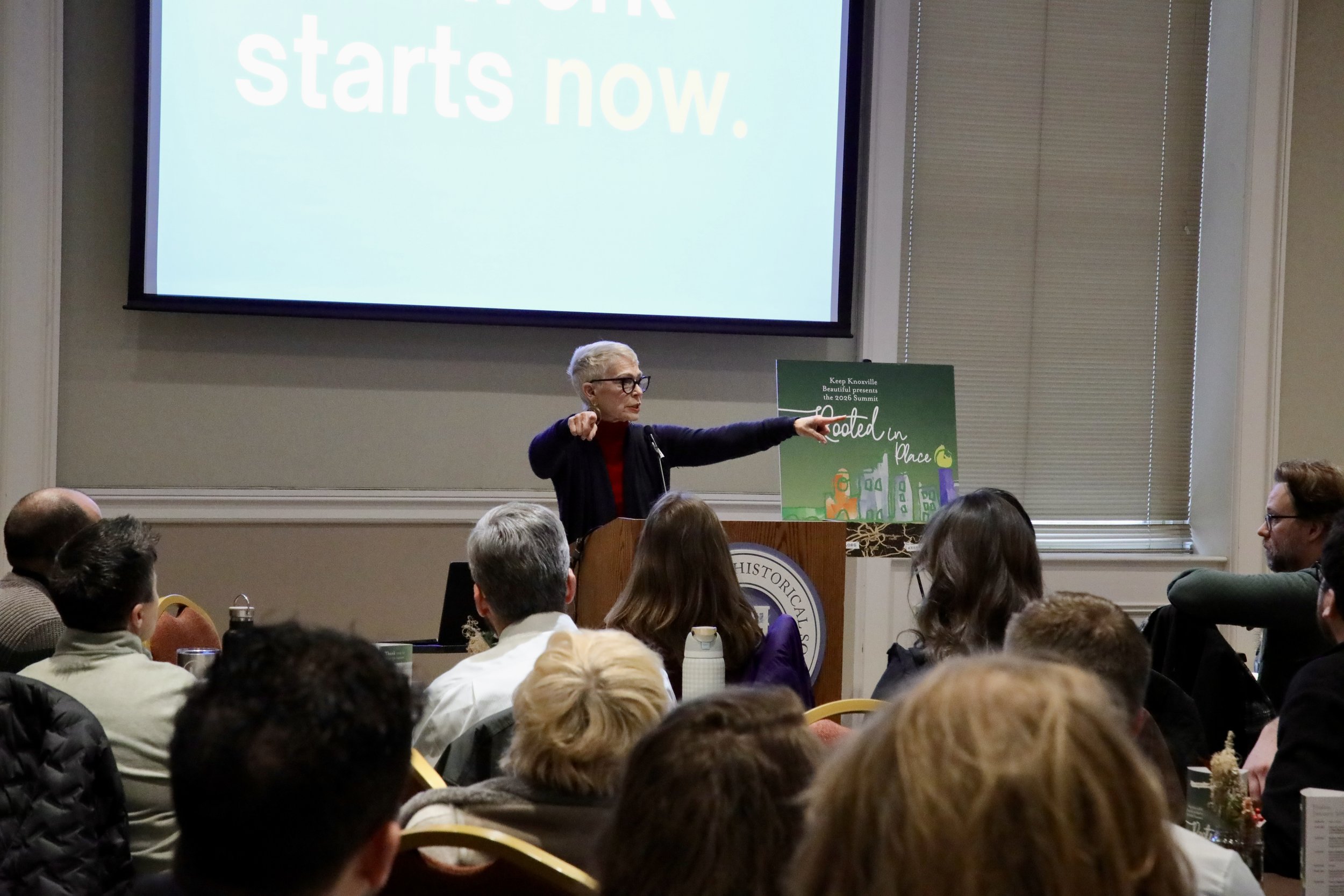
Carol Coletta speaking at the KKB 7th Annual Summit. Photo by: Emily Weathers
Carol shared that the goal of placemaking isn’t perfect agreement or “community harmony.” The goal is proximity across differences — shortening the distance between people of different incomes, races, ages, and backgrounds. She reframed public life as a system that creates regular contact with difference.
Why it matters: Democracy and upward mobility depend on everyday exposure to difference, not just bonding within like-minded groups.
Weak Ties Drive Opportunity (Bridging vs. Bonding Capital)
Drawing on research from Raj Chetty and others, Carol emphasized the importance of “weak ties.” Weak ties are low-stakes relationships with people outside your immediate circle.
Bonding capital = family, close friends (safety and identity)
Bridging capital = casual connections across difference (opportunity and mobility)
Chetty’s research shows that upward mobility strongly correlates with having relationships with people of higher income.
Why it matters: Public spaces should be designed to foster weak ties because weak ties are how opportunity travels.
Design Is Not Enough — People Make Places Work
Carol stressed that great design alone does not create public life. Design creates the possibility of public life, but people make it real.
She highlighted the importance of:
Hosts and ambassadors
Staff who set the tone and model civility
Programming that invites participation (not just spectacle)
Active stewardship
Why it matters: Cities often invest in capital projects but underinvest in the human systems that make them socially successful.
Tom Lee Park: Designing for “Closeness Among Difference”
Carol described the transformation of Tom Lee Park in Memphis.
Before:
Thirty-one acres, only six trees
Only heavily used during a seven day annual festival
Otherwise barren and underused
After redesign and intentional operations:
Over 1 million visitors in year one
Demographics mirrored the city
64% of visitors reported meeting someone new
They intentionally:
Chose a neutral riverfront location (“no one’s neighborhood, everyone’s neighborhood”)
Designed for social mixing
Managed for civility
Programmed daily participation
Why it matters: Social mixing doesn’t happen accidentally. It must be designed, programmed, and managed on purpose.
Turn Burdens into Gifts (Theaster Gates Influence)
Carol drew inspiration from Theaster Gates, who transforms abandoned buildings and neglected neighborhoods into cultural assets. One quote she shared from him was, “The building wasn’t dead. What was dead was our capacity to believe.”
She challenged cities to see discarded buildings, neglected neighborhoods, and underused public land not as burdens, but as assets.
CORE TAKEAWAYs:
Connection doesn’t happen by accident. Cities must intentionally design and care for places that bring people together.
“Public life doesn’t rebuild itself. It’s rebuilt by people who decide that being closer is worth the effort.”
Elizabeth Wells, Kathleen Nolte, and Jules Downum, Thrive Regional Partnership Panel
PEOPLE ARE THE INFRASTRUCTURE
Regional Capacity & Catalytic Placemaking | Elizabeth Wells
Creative placemaking across 16 counties in Alabama, Georgia, and Tennessee focused on leveraging small catalytic grants into long-term investment. The work emphasized peer-to-peer learning and daily leadership to sustain momentum.
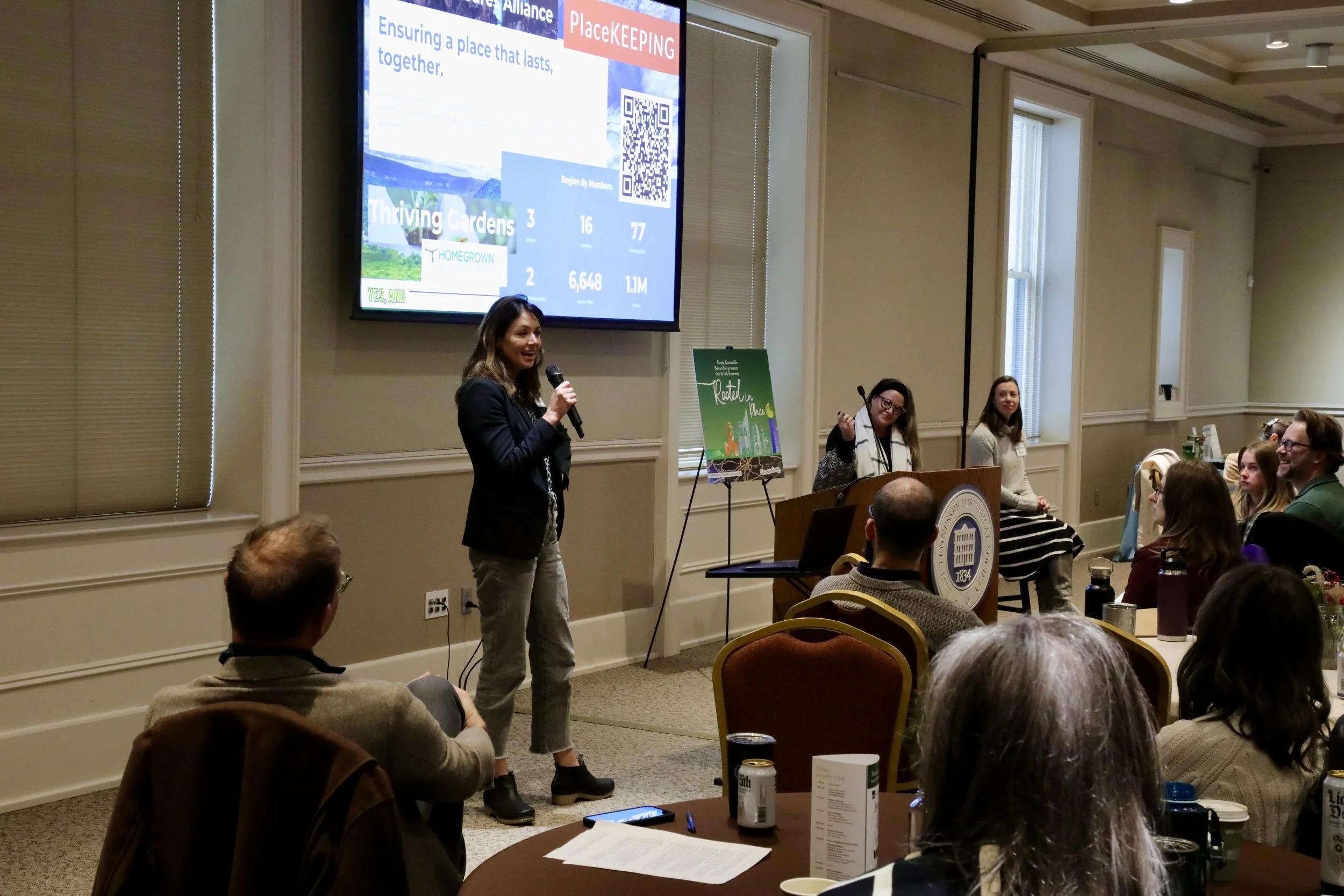
Jules Dham speaking at the KKB 7th Annual Summit. Photo by: Emily Weathers
A $21,000 grant in Rossville, GA, transformed a blighted duck pond into a human-centered park. That investment leveraged $150,000+ in support, attracted restaurants and artists, and sparked millions in downstream investment.
When the leadership position driving the project ended, momentum slowed.
Placemaking requires someone to wake up every day and move the needle. Without sustained leadership, even successful projects stall.
Performing Arts as Civic Infrastructure | Jules DOWNUM
Dance and immersive art were presented as essential placemaking tools — creating awe, empathy, and pro-social connection. Art was framed not as a metaphor, but as lived trust.
An abandoned mill became the site of a large-scale immersive production:
6,000 visitors
45 artists
$300,000 paid to local creatives
2 million social impressions
The project also had a long-term impact through free K–5 dance education, a school-to-site parade, and ongoing neighborhood programming.
Performing arts create belonging. Bodies in space build a connection.
What Funders Look For | Kathleen NolTE
From a funder’s perspective, authenticity, collaboration, and experimentation matter most. Strong stories rooted in community effort move investments forward.
Testing ideas on a small scale strengthens proposals and builds confidence for larger support.
Funders are people. Passion matters. Partnerships matter. Experimentation matters.
Core Takeaways:
Start with people. Build with them. Experiment. Stay committed.
“People are so deeply worthy of investment.”
Jon Jon Wesolowski, The Happy Urbanist, Chattanooga, TN
TACTICAL PLACEMAKING & COMMUNITY-LED ACTION
Pirate vs. Librarian | Action Before Permission
Civic change exists on a spectrum between the “librarian” (process-driven, cautious, rule-following) and the “pirate” (action-oriented, scrappy, willing to move without permission). Bureaucratic systems are often full of librarians. What’s missing is pirate energy—people willing to prototype change in the public realm instead of waiting years for approval.
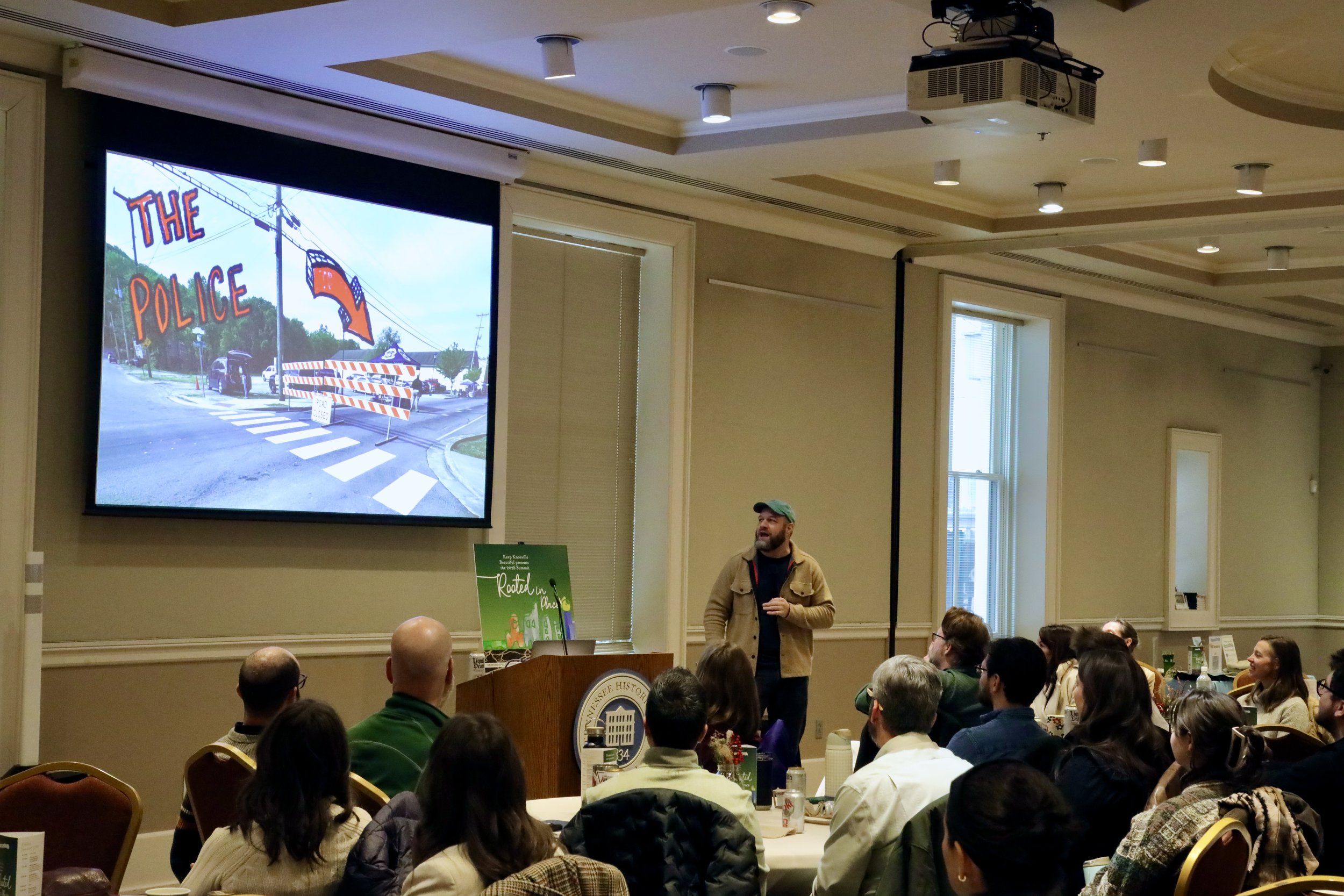
Jon Jon Wesolowski speaking at the KKB 7th Annual Summit. Photo by: Emily Weathers
Waiting for the perfect process often equals inaction. Tactical action creates momentum.
“Lots of Little Things” Add Up | Small Actions, Big Impact
Borrowing from the “long tail” concept, Jon Jon argued that many small actions can collectively rival or surpass great institutional efforts.
Examples include neighbors starting mutual aid fridges, residents clearing overgrown sidewalks, and communities creating informal pedestrian paths.
You don’t have to solve the entire problem at once. Small, visible wins build belief, generate data, and create political leverage.
The Bench Protest | From Prototype to Policy
After public benches were removed in Chattanooga, Jon Jon built and installed a large unauthorized bench in protest. The action went viral and sparked a grassroots movement to install bus-stop benches across the city.
More than 200 benches were installed. The city did not remove them. The movement eventually received a city award.
A visible prototype forces cities to respond. Tactical action can evolve into lasting policy change.
Tactical Urbanism | Paint First, Concrete Later
Temporary interventions—painted crosswalks, tactical daylighting, posts, and recycled bike-lane barriers—can dramatically improve safety.
At one Nashville intersection, speeding dropped from 97% of drivers to just 3% after low-cost design changes.
Cheap, temporary pilots reduce risk, prove effectiveness, and justify permanent investment.
Core Takeaways:
Start imperfectly. Act locally. Build belief. Then turn pirates into policy.
“Sometimes following a moral code means you’re going to have to break stupid rules.”