
Leave the Leaves
Fallen leaves are a part of nature. Let them be!
The seasons are changing! Trees are losing their leaves, and they are spreading over the lawns, roads, and sidewalks. Fallen leaves provide food, shelter, nests, and habitats for animals during the harsh winter months. Support wildlife by leaving the leaves for insects to burrow in, birds to make nests, chipmunks to forage, toads to camouflage, and turtle blankets. As the leaves break down, they help return nutrients to the soil, creating fertilized soil for your plants. It’s nature’s way of recycling! Leaves don’t have to mean your yard looks messy; it just means you are leaving the leaves for the wildlife.
If you must do something…
Rake them to the street for leaf collection
Last season the City of Knoxville collected over 7,000 tons of leaves that were processed for mulch and diverted from the landfill! The leaf collection season runs from November through February. The Public Service Department crews will visit your neighborhood to vacuum your loose leaves. Please rake your leaves into rows at the edge of the street in an unobstructed area for easy collection. Check out the City of Knoxville’s website for more information and the leaf collection schedule!
Shred them
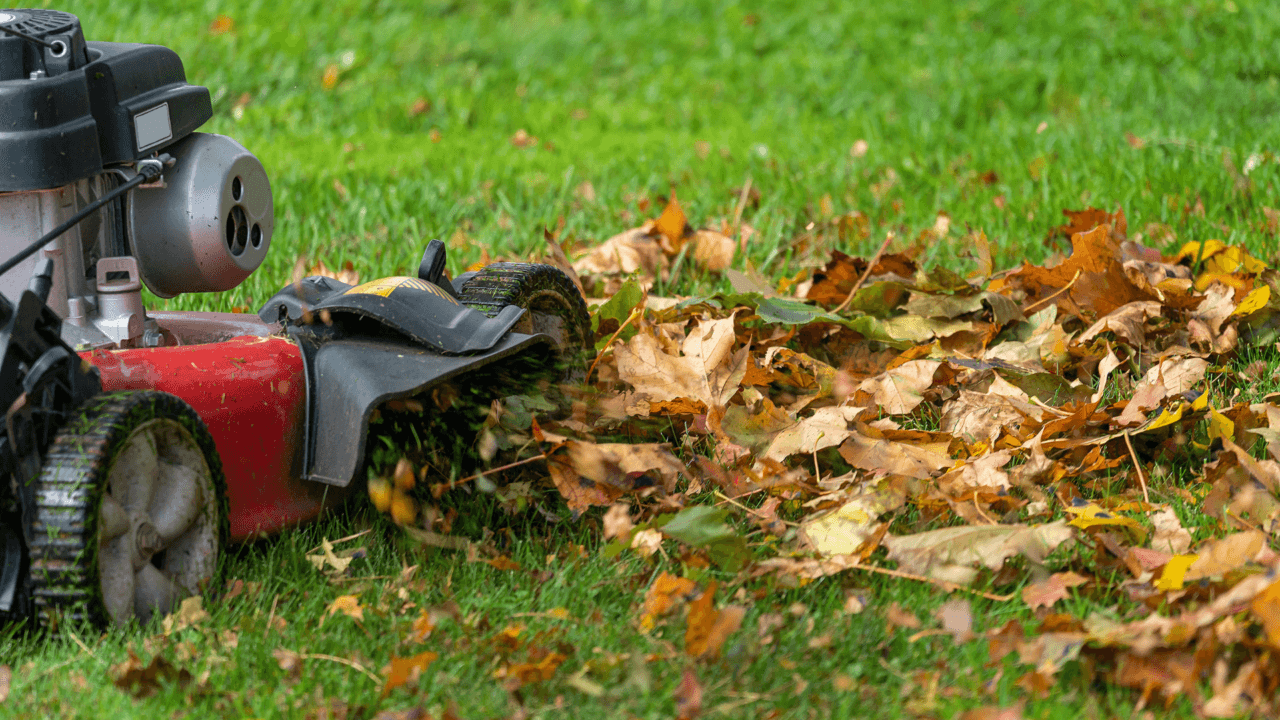
Lawn mower mowing over leaves. Source: Pine Hills Nursery
Shred the leaves by going over them with a lawn mover. This will help the leaves decompose faster and they won’t smother your grass lawn. You can add the shredded leaves 3-5 inches deep in your garden beds as a nutrient rich mulch.
Rake them into your garden
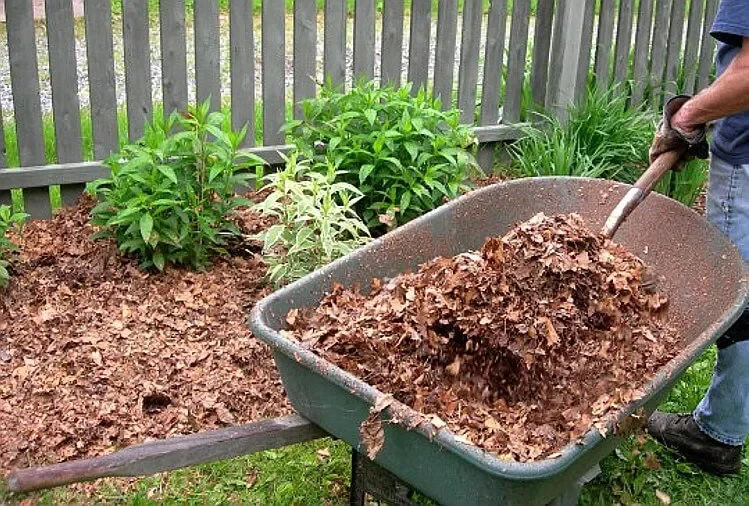
Shoveling leaves into garden. Source: unknown
If you don’t want the leaves on your lawn, rake them into your garden beds. Leaves act as a natural blanket, keeping the soil warmer in winter, reducing evaporation, keeping roots hydrated, and blocking light from reaching weed seeds. A leaf layer of 3-5 inches deep is usually a good amount for most garden beds. Don’t pile them on top of your plants but instead put them around the plants to cover any open soil, just like any other kind of mulch. They’ll suppress weeds, preserve soil moisture, and naturally compost and return nutrients directly to the root zone of your plants as they break down.
Compost them in your backyard
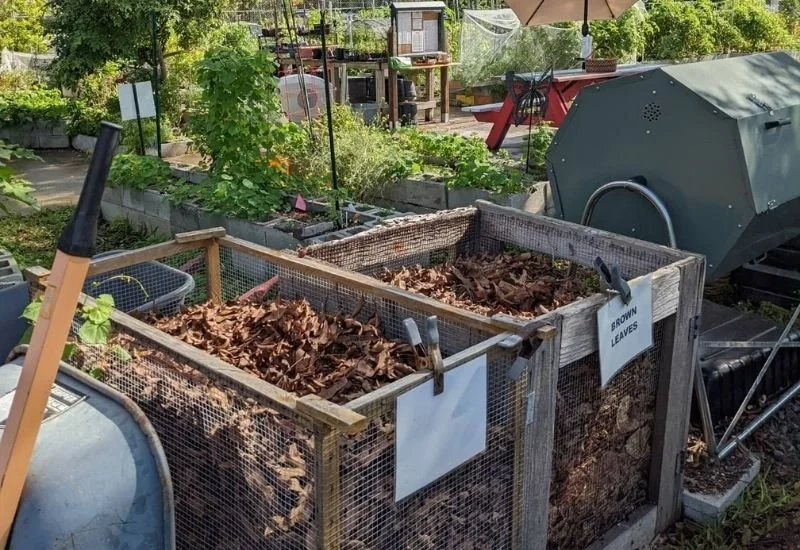
Leaves in compost bins. Source: Gardening Chores
Mix leaves into your backyard compost pile as a “brown” (carbon-rich) material and balance with “greens” (food scraps) for faster decomposition. As leaves break down, they return minerals to the soil: calcium for strong plant cell walls, magnesium for photosynthesis, nitrogen for leafy growth, and phosphorus and potassium for flowers and fruit. Leaf litter increases soil’s organic content, which improves its ability to hold both water and nutrients. Healthy soil is alive. Leaves feed earthworms, fungi, and bacteria, all of which help cycle nutrients and keep plants thriving. Please do not put the leaves in the City of Knoxville Compost food scrap drop-offs because they don’t accept yard waste.
Don’t bag them
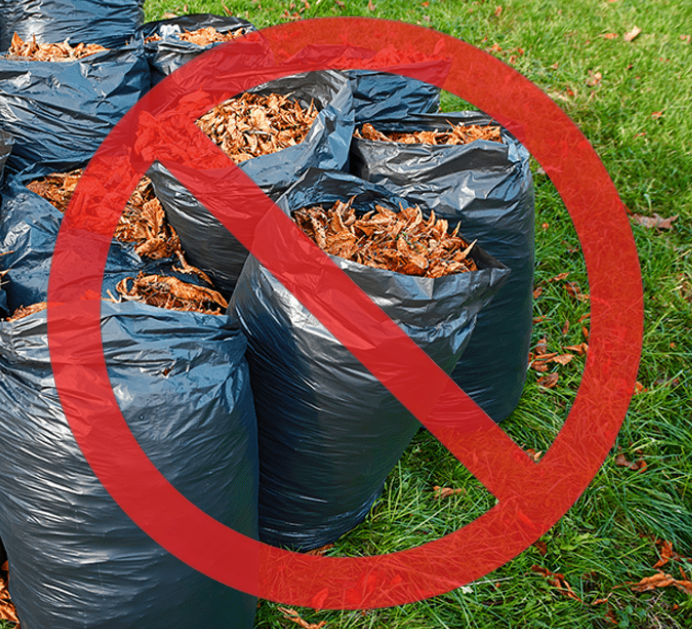
Bagged leaves with slash through it. Source: Kimberly Borges Blog
According to the U.S. Environmental Protection Agency, yard trimmings (including leaves) make up around 13% of municipal solid waste. When leaves are bagged and sent to landfills, they take up enormous space that could otherwise be used for non-compostable waste. Leaves buried in landfills decompose anaerobically (without oxygen), producing methane, a greenhouse gas 28 times more potent than carbon dioxide. By leaving leaves on your soil or composting them, you help fight climate change. Bagging leaves requires disposable bags, often made of paper or plastic. By not bagging, you cut down on unnecessary single-use waste. Leaf blowers, trucks hauling waste, and municipal processing all consume energy. Leaving leaves in your garden eliminates these emissions at the source.
Make a leaf craft
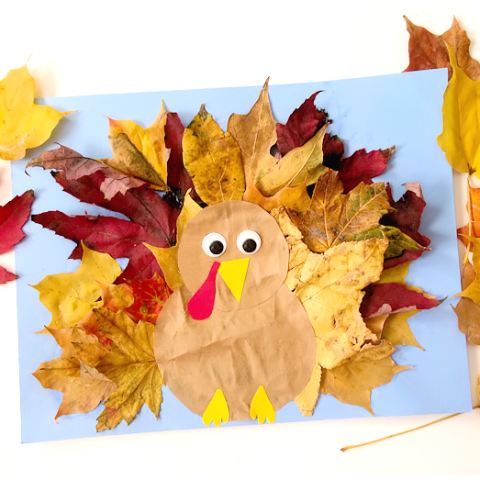
Fall Leaf Turkey Craft. Source: Our Kid Things
You can make all kinds of crafts with the fall leaves, such as a Thanksgiving turkey, a leaf print, a wreath, or a garland!