
Invasives 101 for Knoxville Residents
What are invasive plants?
According to the USDA, “an invasive species is defined as a species that is non-native (or alien) to the ecosystem and is likely to cause economic, environmental, or human harm.” Invasive plants are aggressive and take nutrients, sunlight, water, and space away from native plants. Many invasive plant species produce large quantities of seeds that move great distances by wildlife or wind, have aggressive roots that are long and dense and smother surrounding vegetation, or their roots or leaves produce chemicals that can harm other plants. Most invasives don’t have predators, and their only goal is to mass-produce seeds and spread rapidly, outcompeting other plants. Invasive plants can decrease overall plant diversity, degrade water quality, and increase soil erosion.
We interviewed Gianni Tesfaye, the Weed Warriors Community Liaison for Ijams Nature Center, to learn more about the invasive plants around Knoxville and how residents can help remove them!
What are the top 5 invasive species in Knoxville?
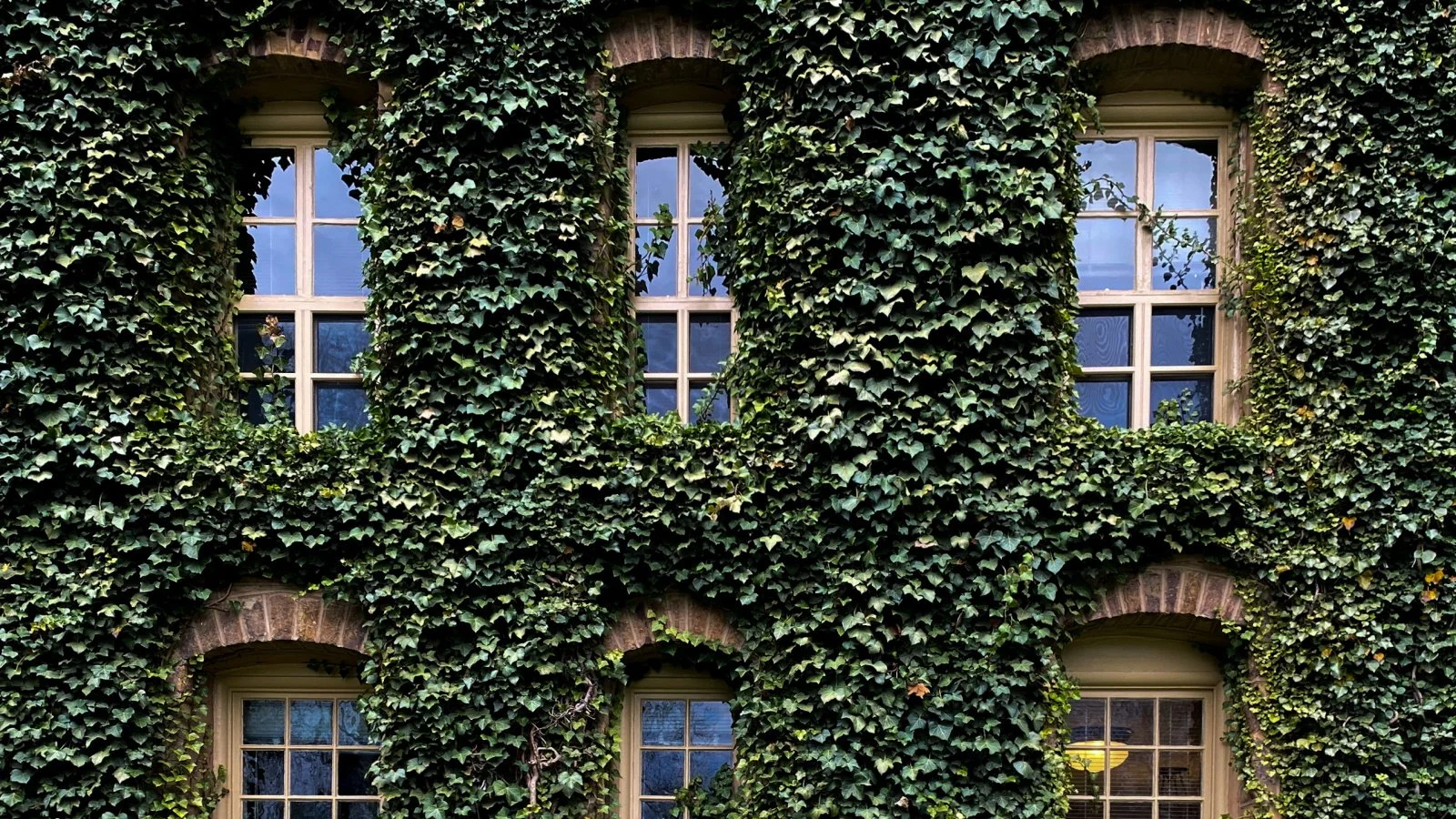
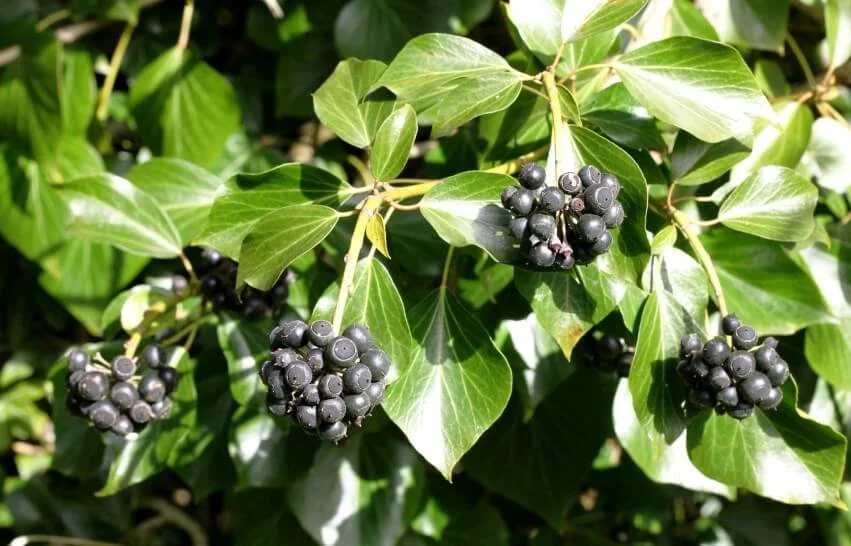
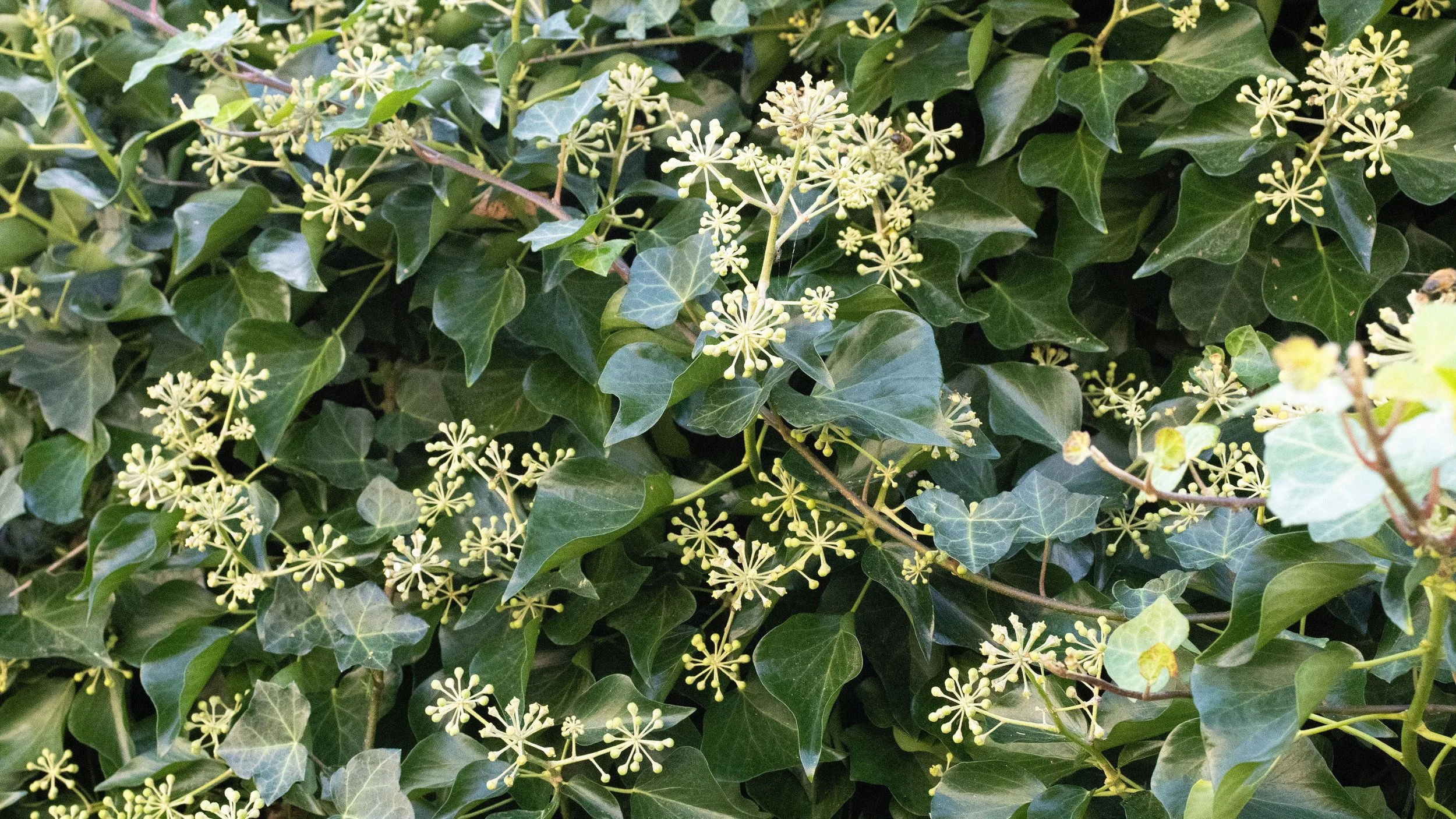
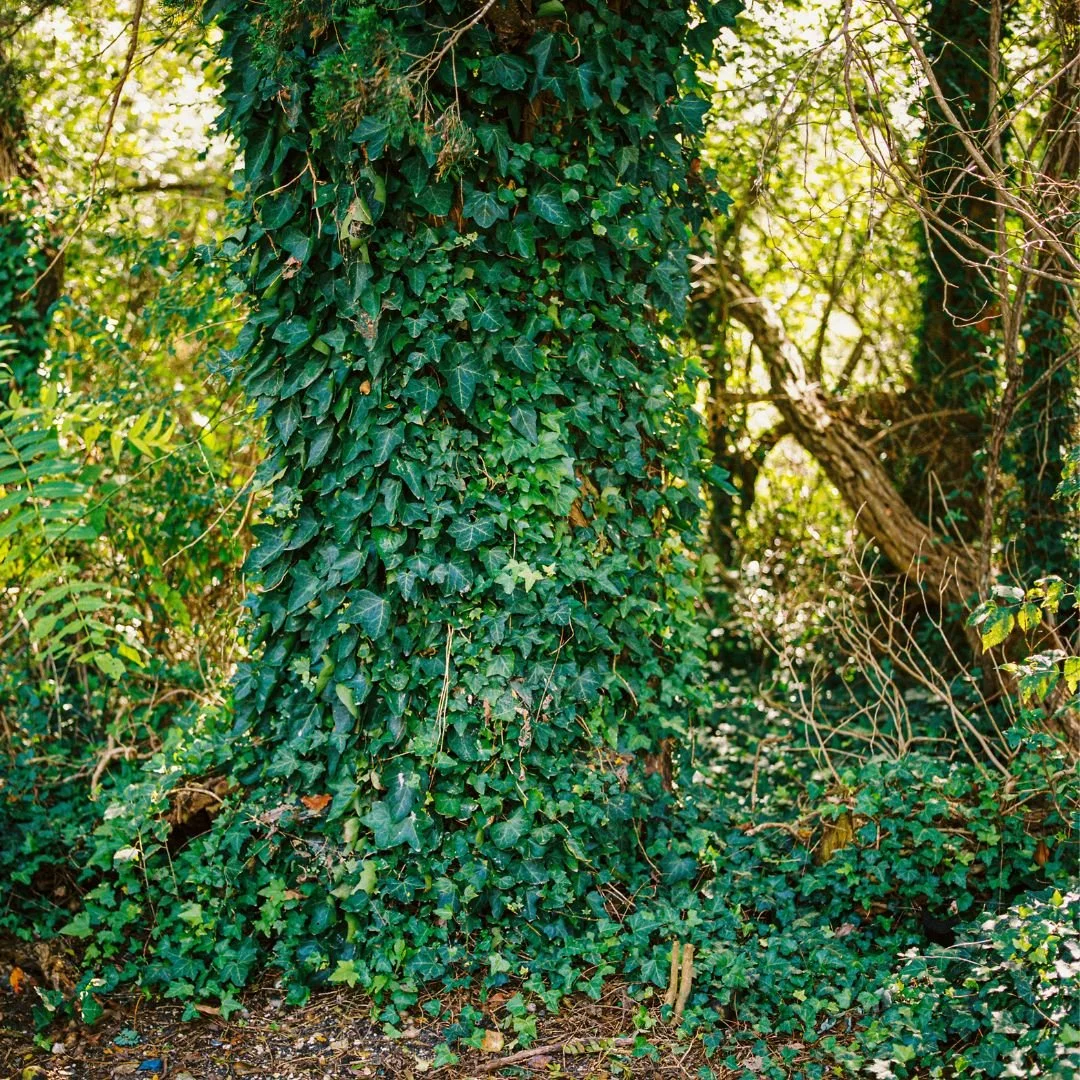
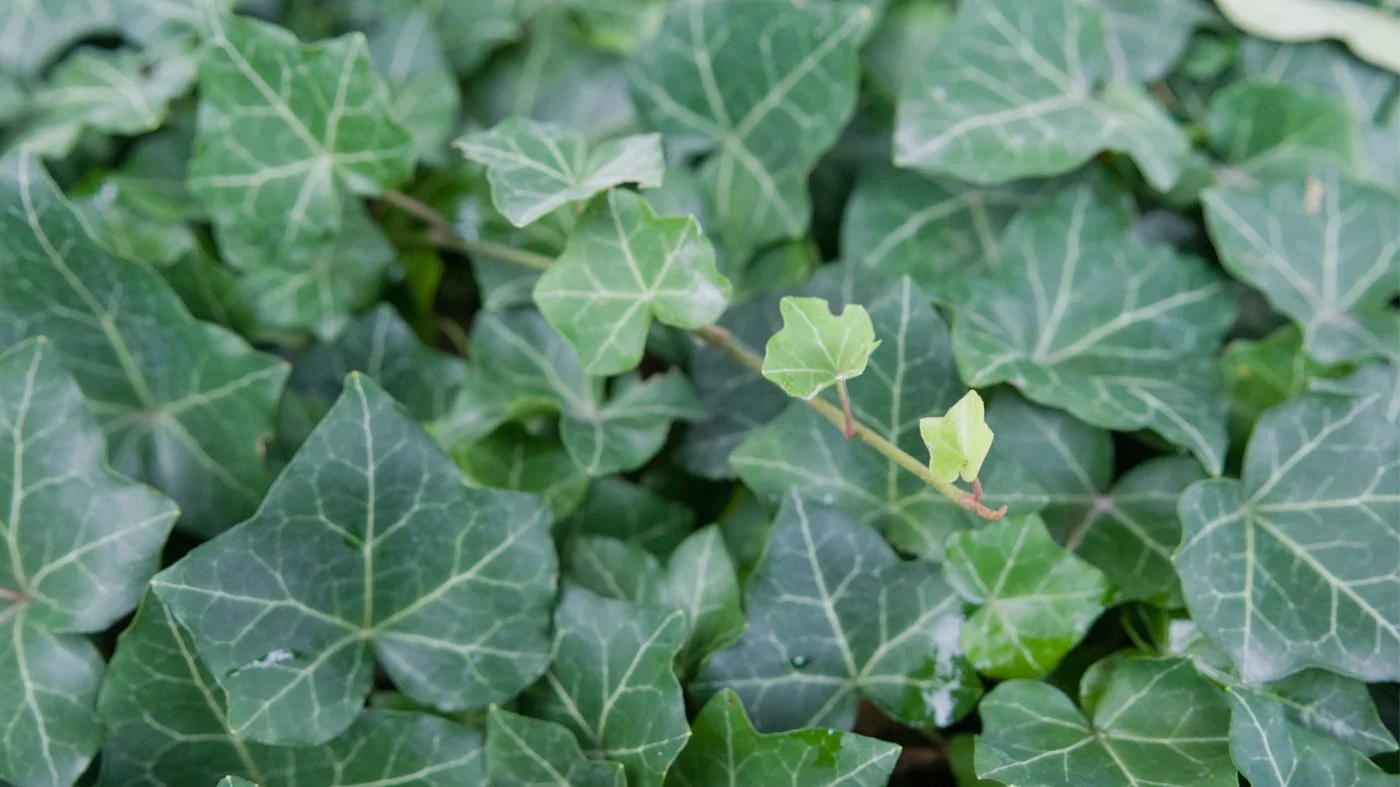
English Ivy
Introduced from Europe in colonial times. It is a traditional ornamental and is still widely planted in landscapes. It is a source of varnish resin, dye, and tanning substances.
Thick dark-green leaves with whitish veins and three to five pointed lobes when young.
The evergreen vine snakes up trees and forms false canopies, climbing up to 90 feet. It forms dense groundcover as well.
From June to October, small yellow-greenish flowers develop on mature plants.
The berries are light green in late summer and dark blue or purple in late winter and spring.
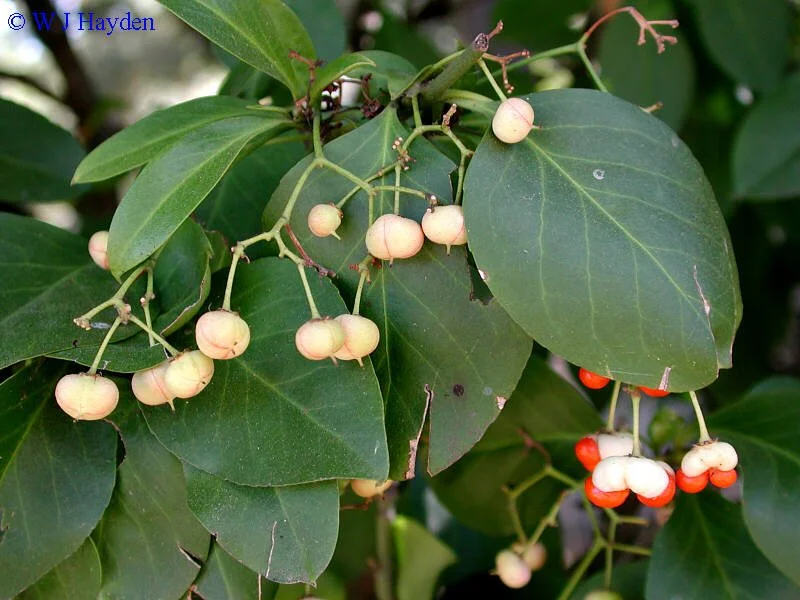
Winter Creeper
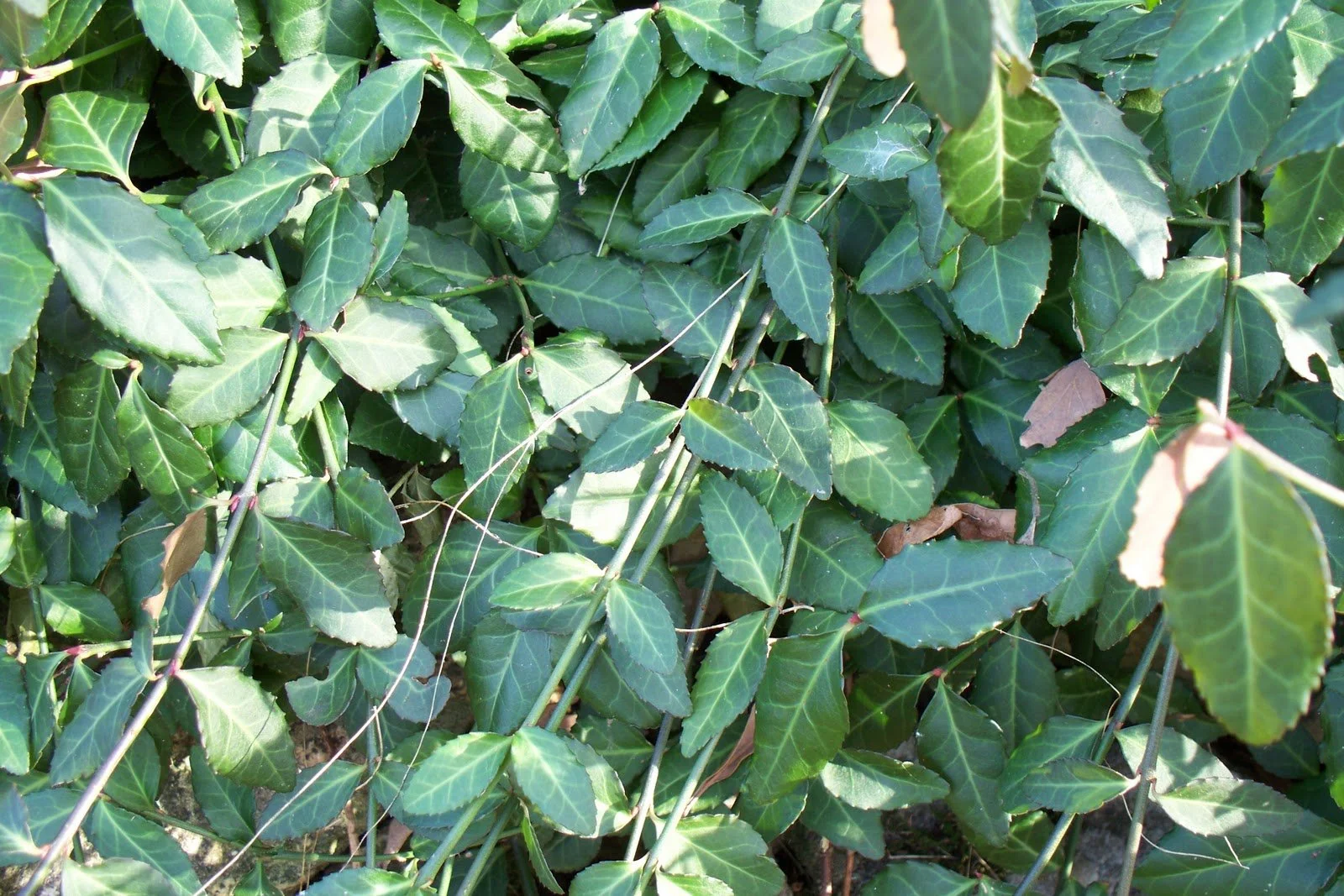
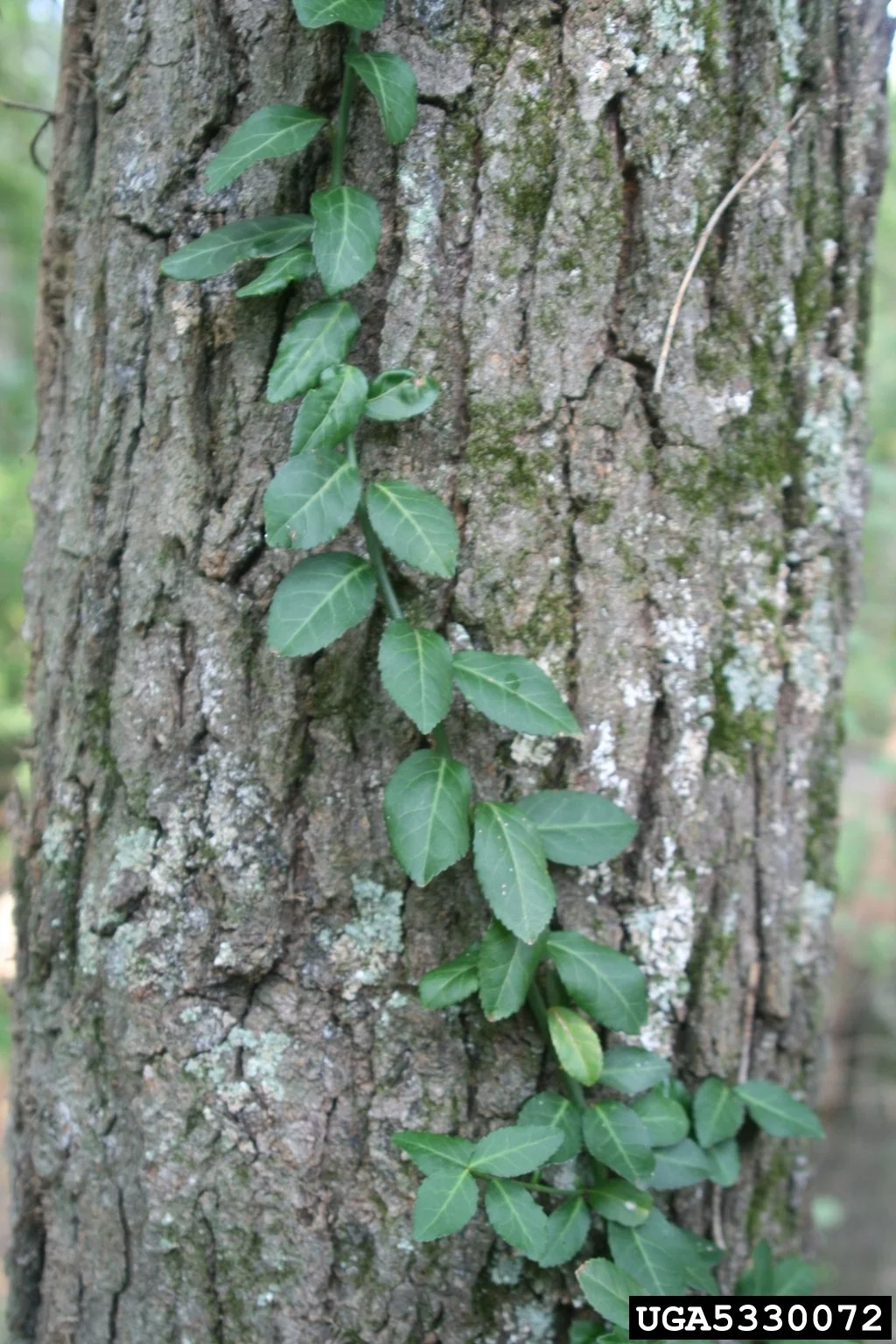
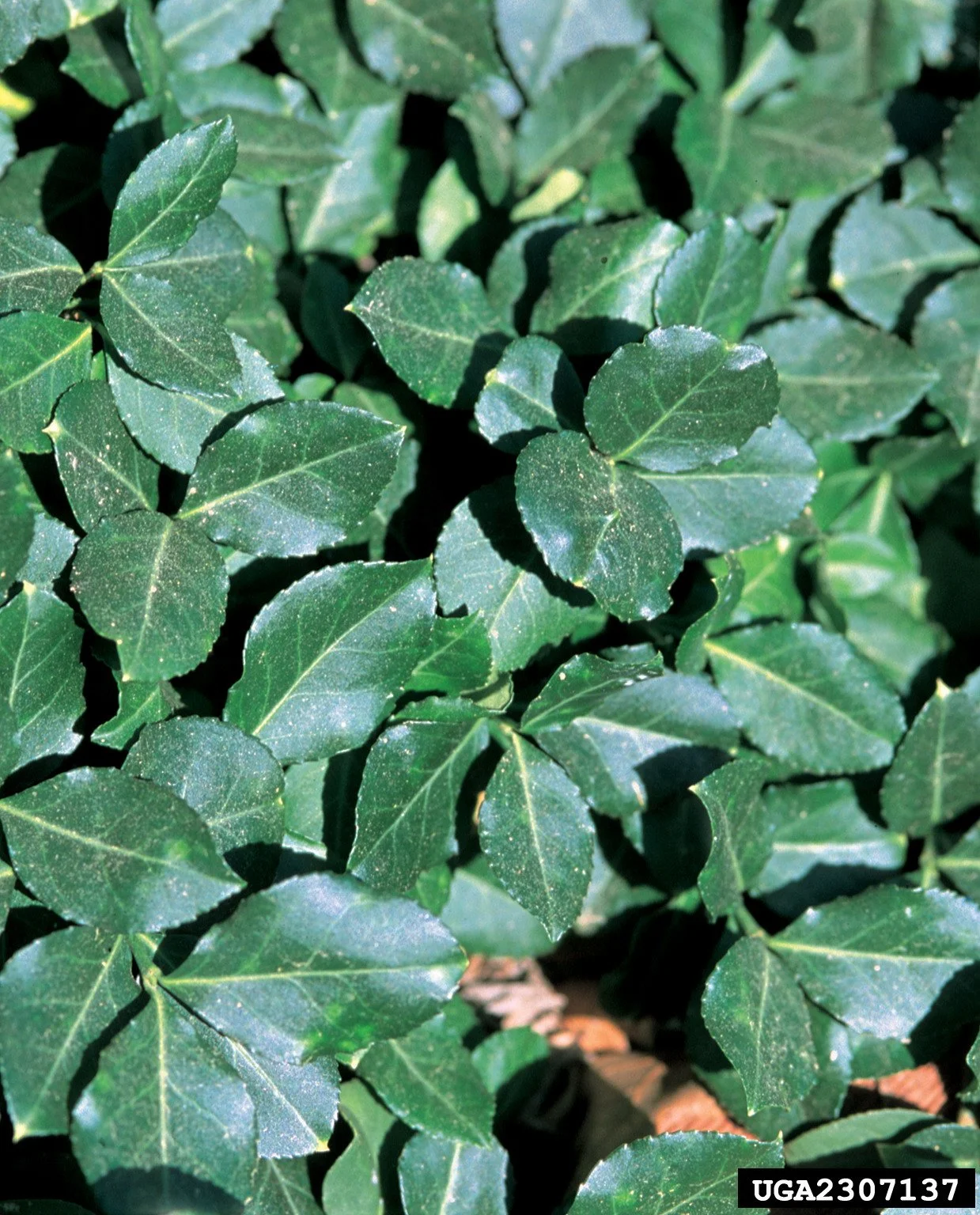
Winter Creeper was introduced from Asia in 1907. It has been widely used as an ornamental groundcover.
Forms dense groundcover and snakes up trees, forming false canopies.
It is an evergreen woody vine that climbs up to 70 feet or stands as a shrub to 3 feet high.
The twigs are lime green and hairless, becoming grayish when mature. The leaves are oval and dark green.
Clusters of small greenish-yellow flowers appear May to July and produce white to red berries.
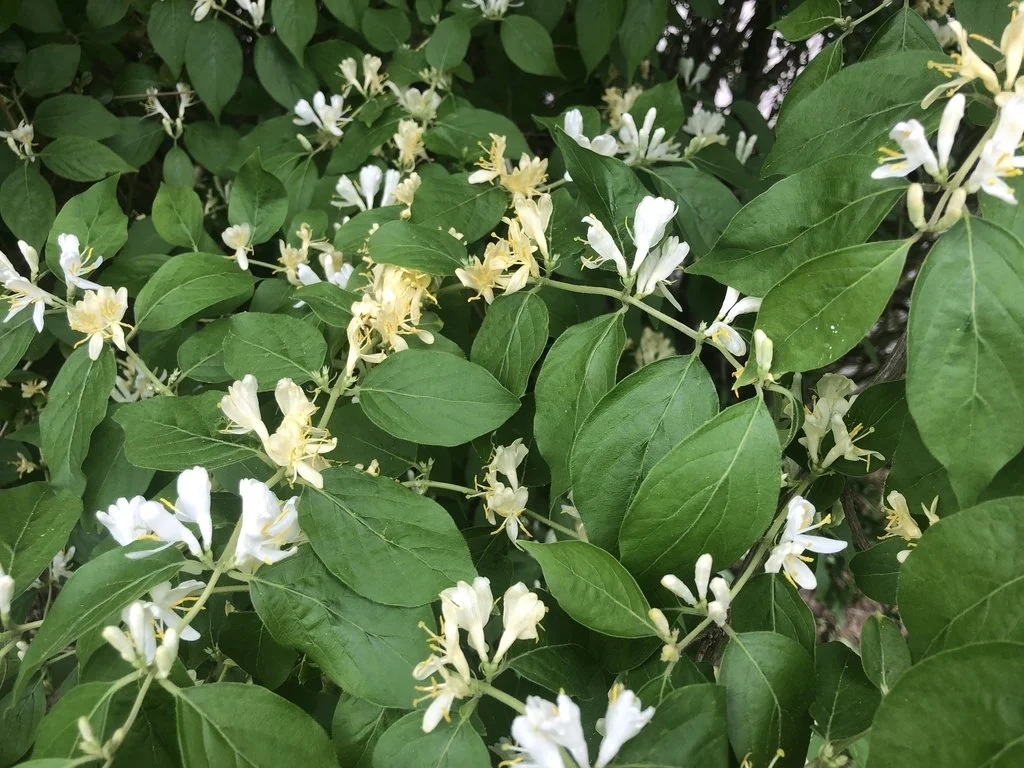
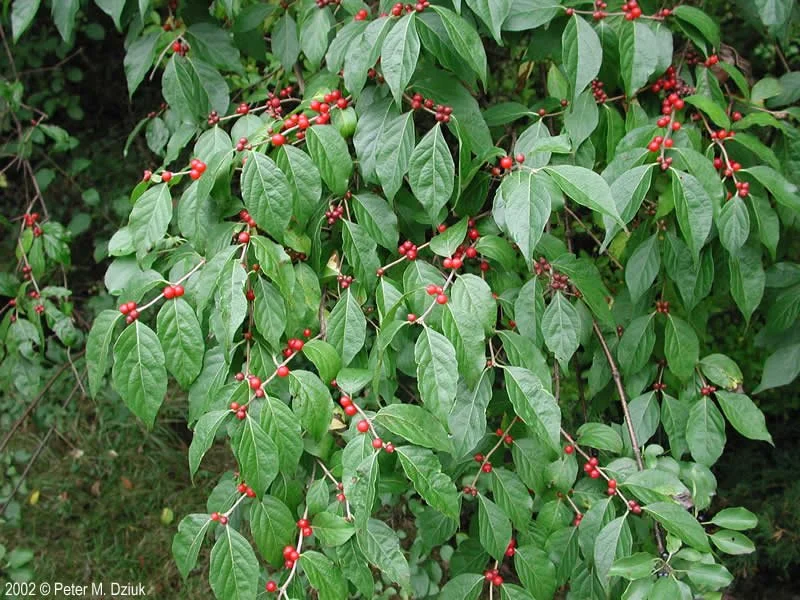
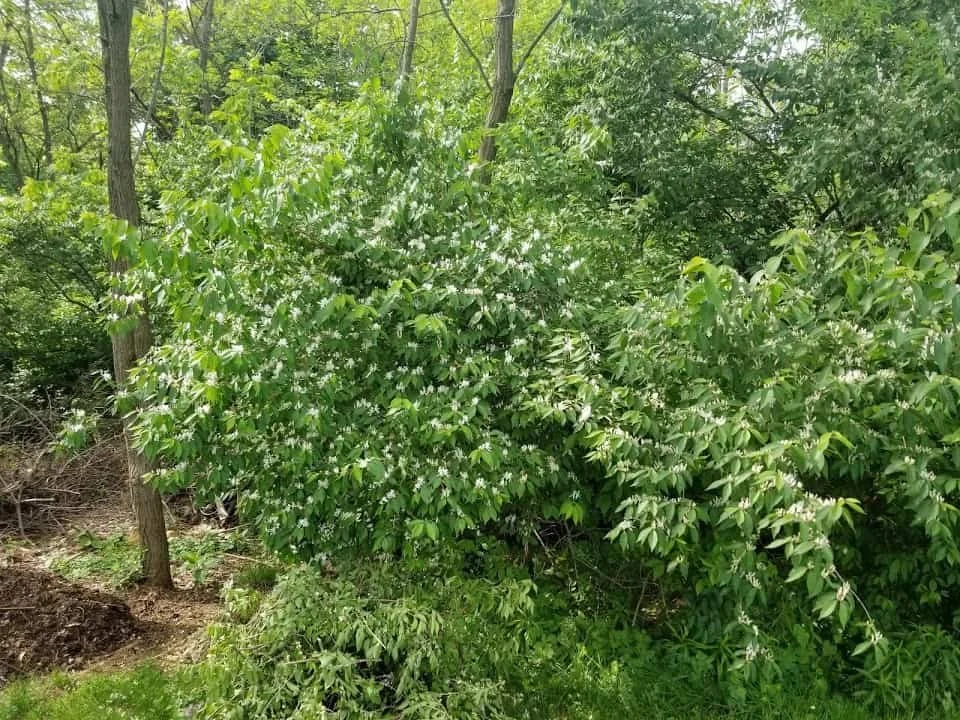
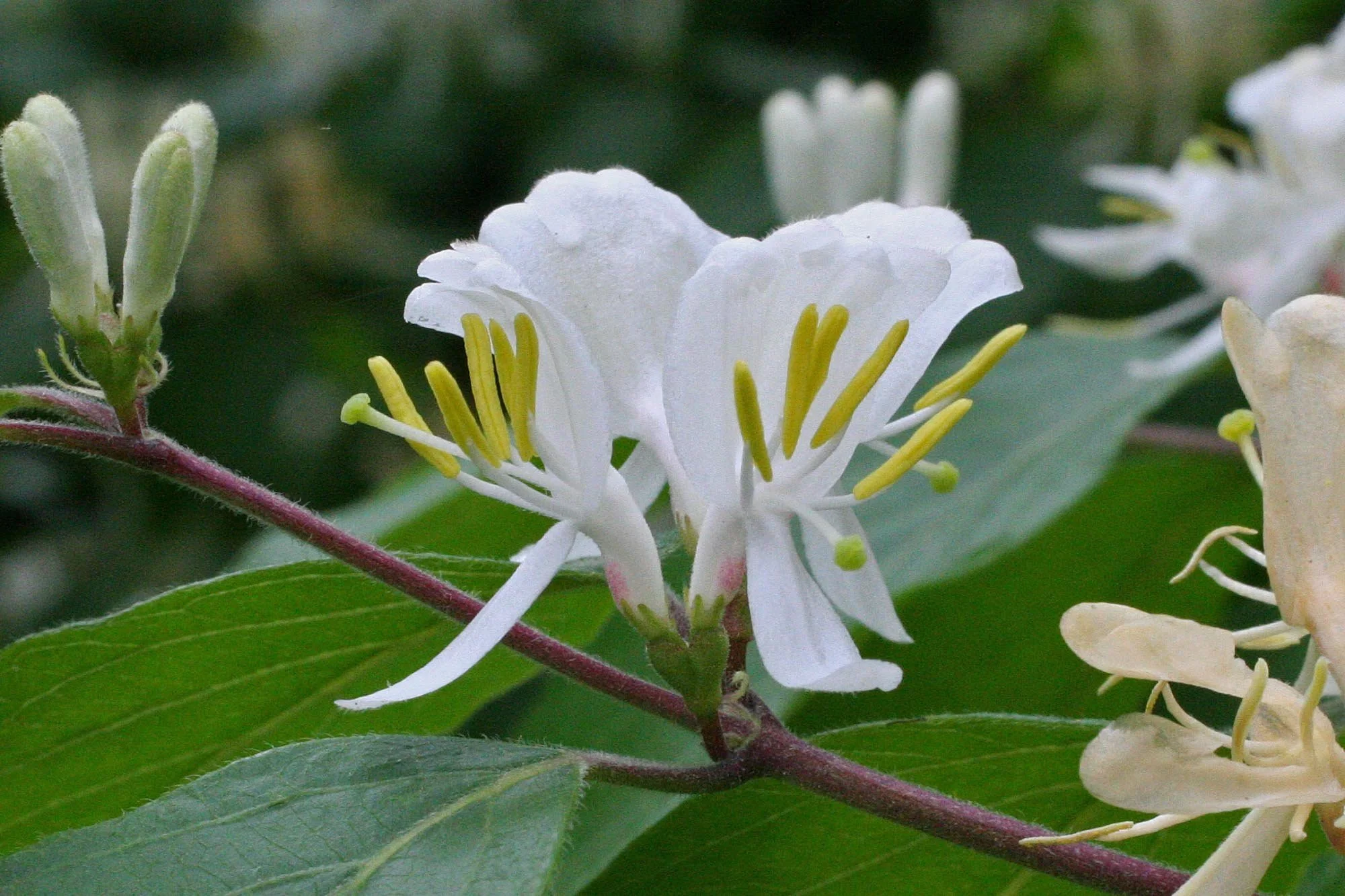
Amur Bush Honeysuckle
They are native to Asia and were introduced into the U.S. in 1855. Bush honeysuckles were unfortunately promoted by agencies to improve wildlife habitat and as a popular ornamental.
A shrub with arching growth, arching over other plants and growing to heights of 20 feet.
Produces chemicals from roots and suppresses seeds of other plants around it.
The round berries are typically dark red, occasionally yellow. They may remain on the shrub through winter. Produces very bright berries quickly, which attract birds and are like fast food to them.
The twigs are smooth, opposite-branched, and the bark is tan with a braided-strand appearance, sometimes flaking. Leaves are opposite. Foliage is typically persistent into winter.
Flowers are white, changing to yellow and blooming May-June.
Forms dense thickets in open forests, forest edges, abandoned fields, pastures, roadsides, and other open upland habitats. Seeds are long-lived in the soil.
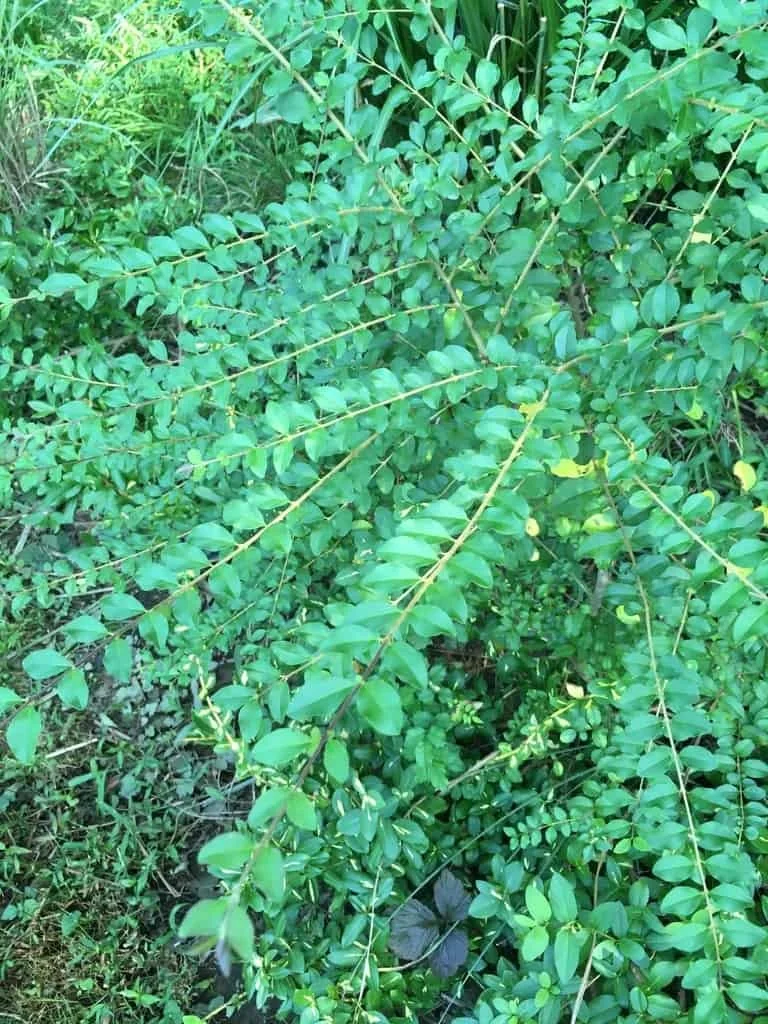
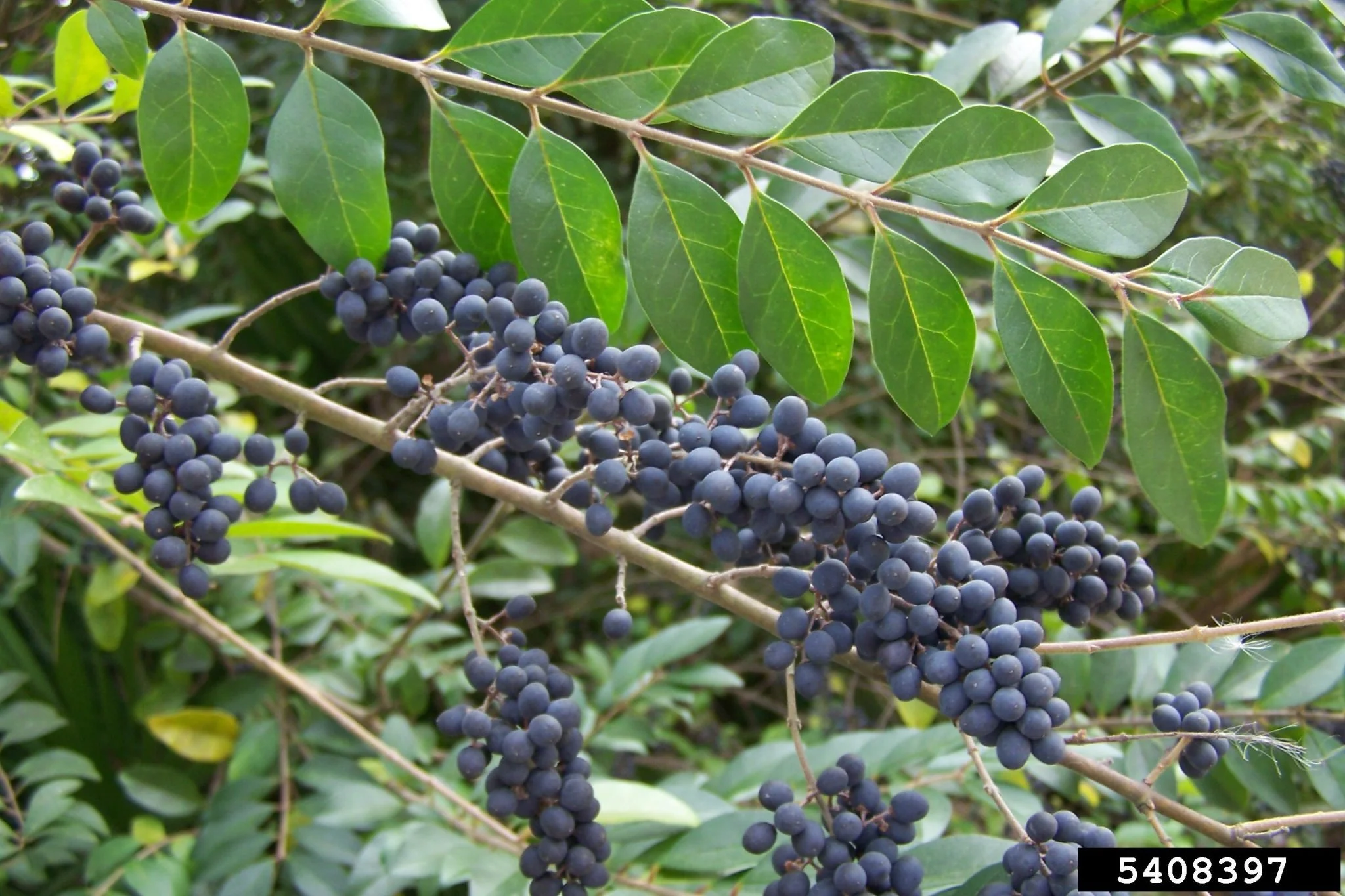
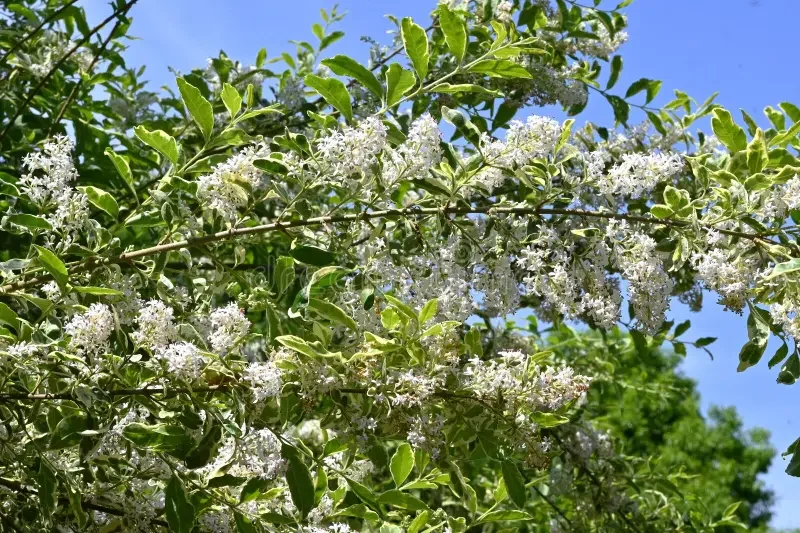
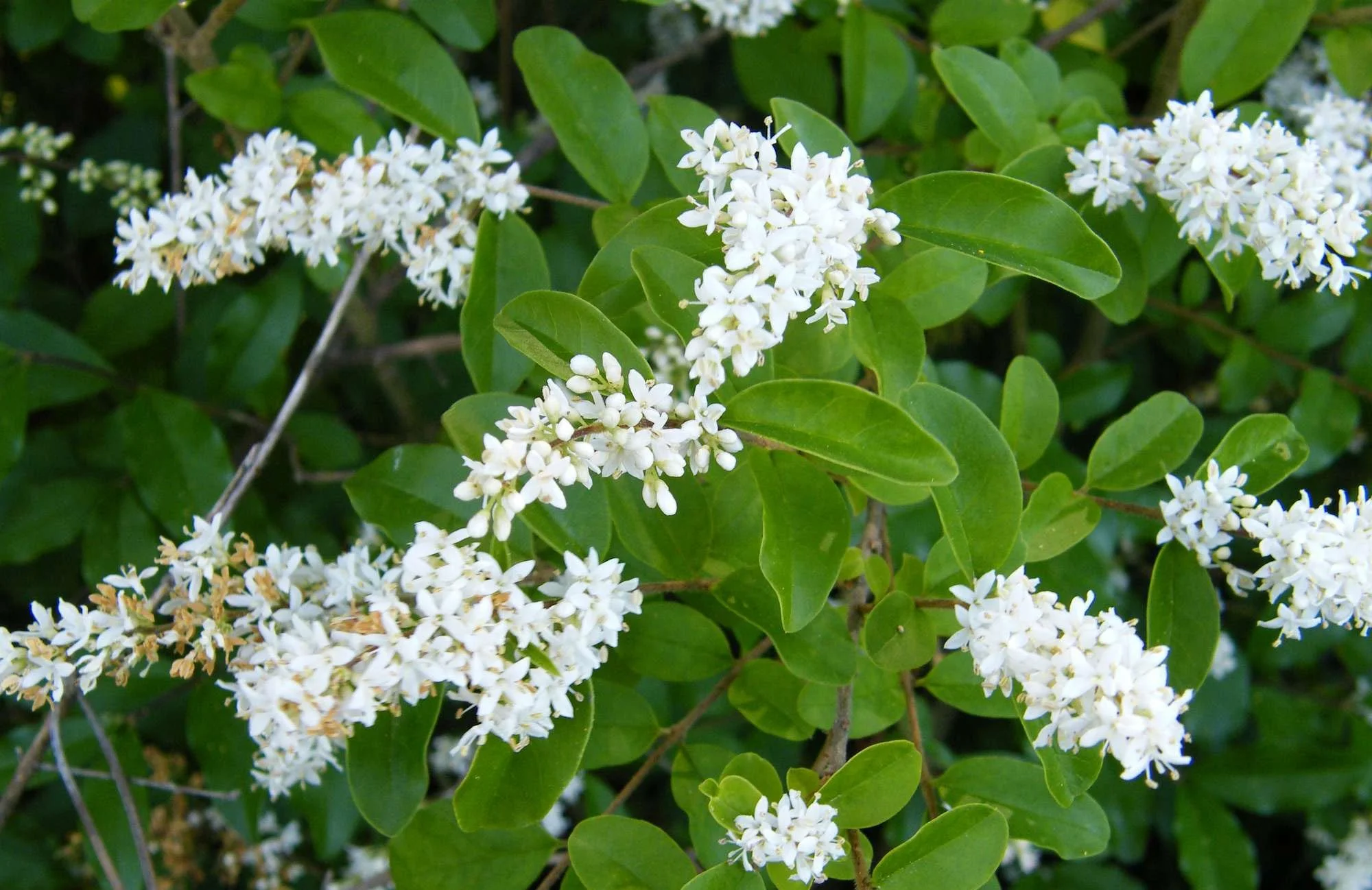
Chinese Privet
Native to China and was introduced in the early to mid-1800s as an ornamental landscape plant. Used to be planted as a privacy fence and easily shoots out new growth if cut.
Multi-stemmed shrub grows 16 feet or more.
Produces massive amounts of purplish-black seed pods that spread quickly. The fruit clusters ripen during September and October and persist through the winter.
Sweet-smelling white flowers bloom in June.
Bark is whitish-tan to gray in color and relatively smooth in texture with raised, light-colored corky dots.
Semi-evergreen to evergreen, opposite leaves are oval-shaped with a rounded tip.
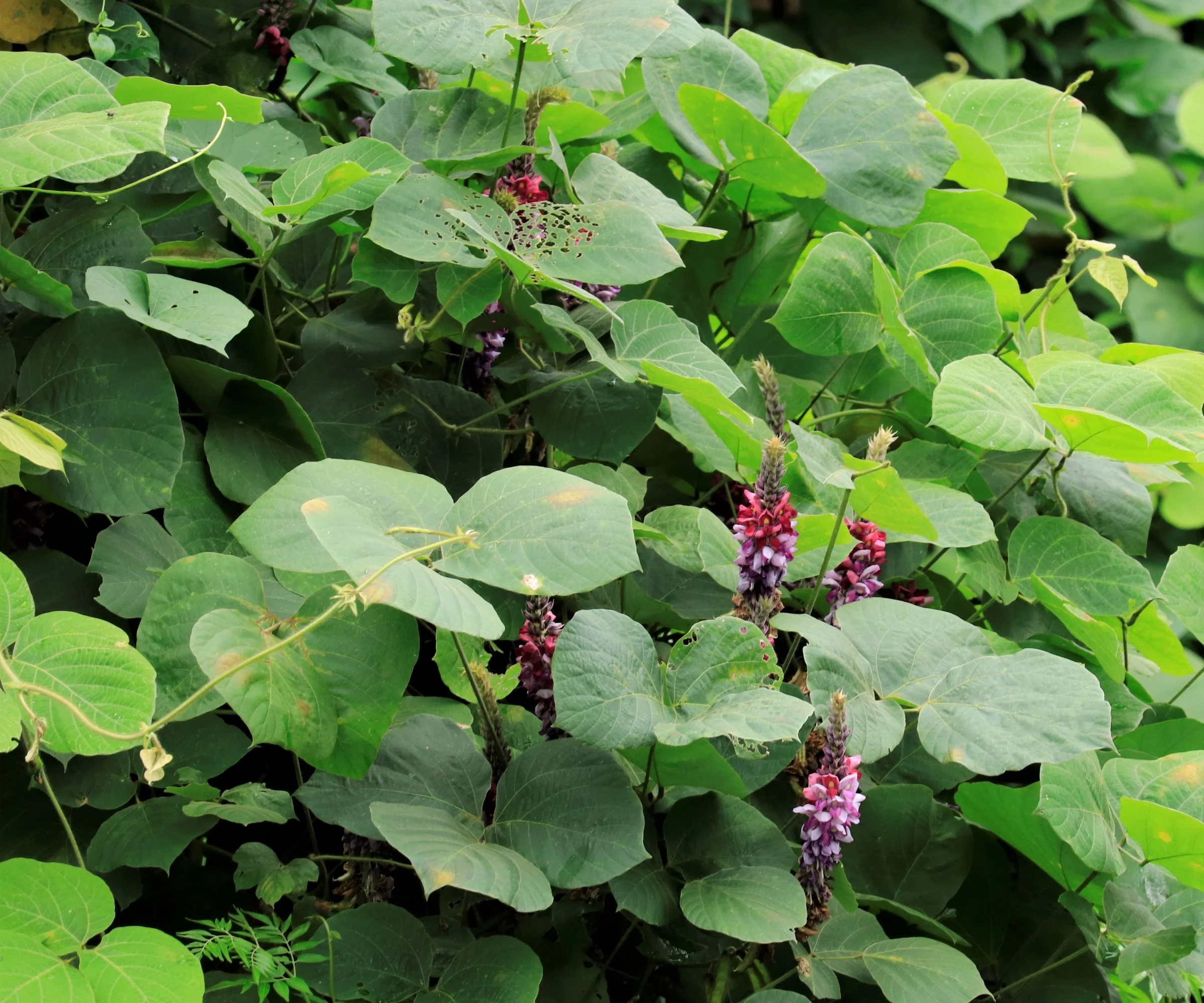
Kudzu
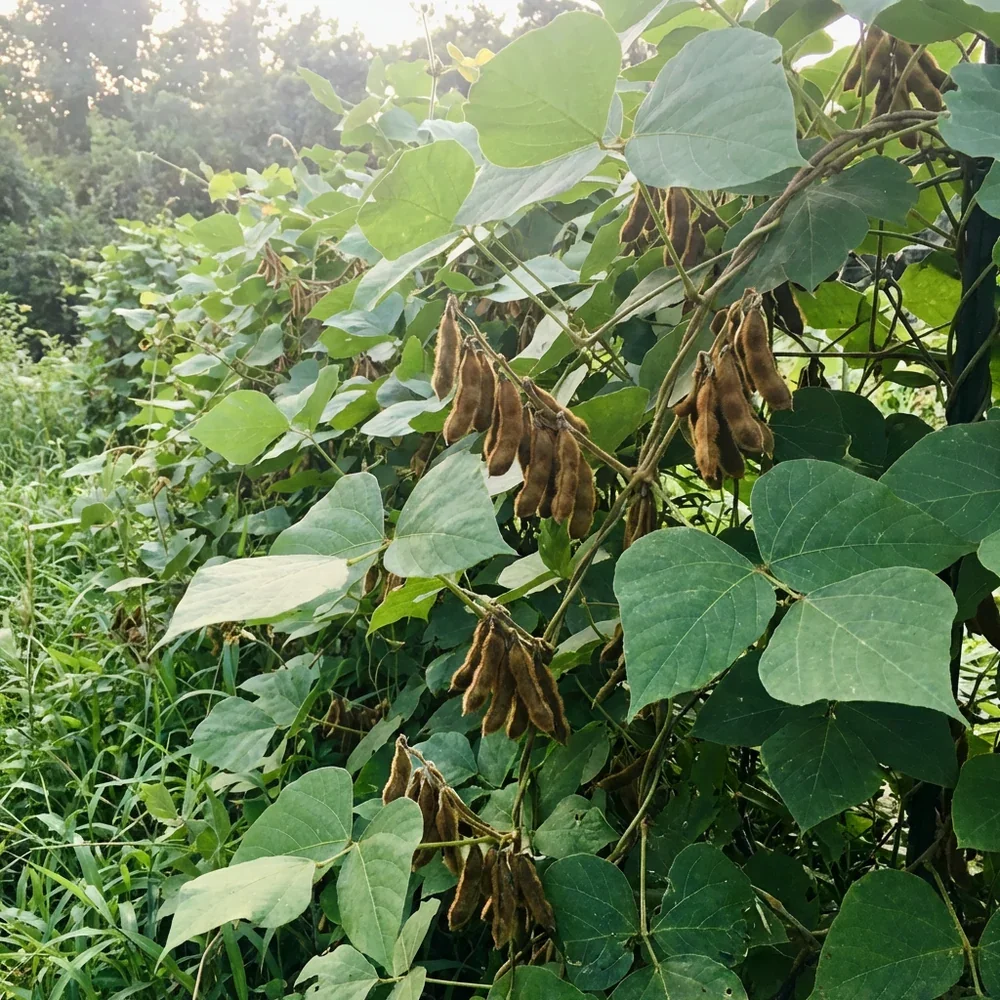
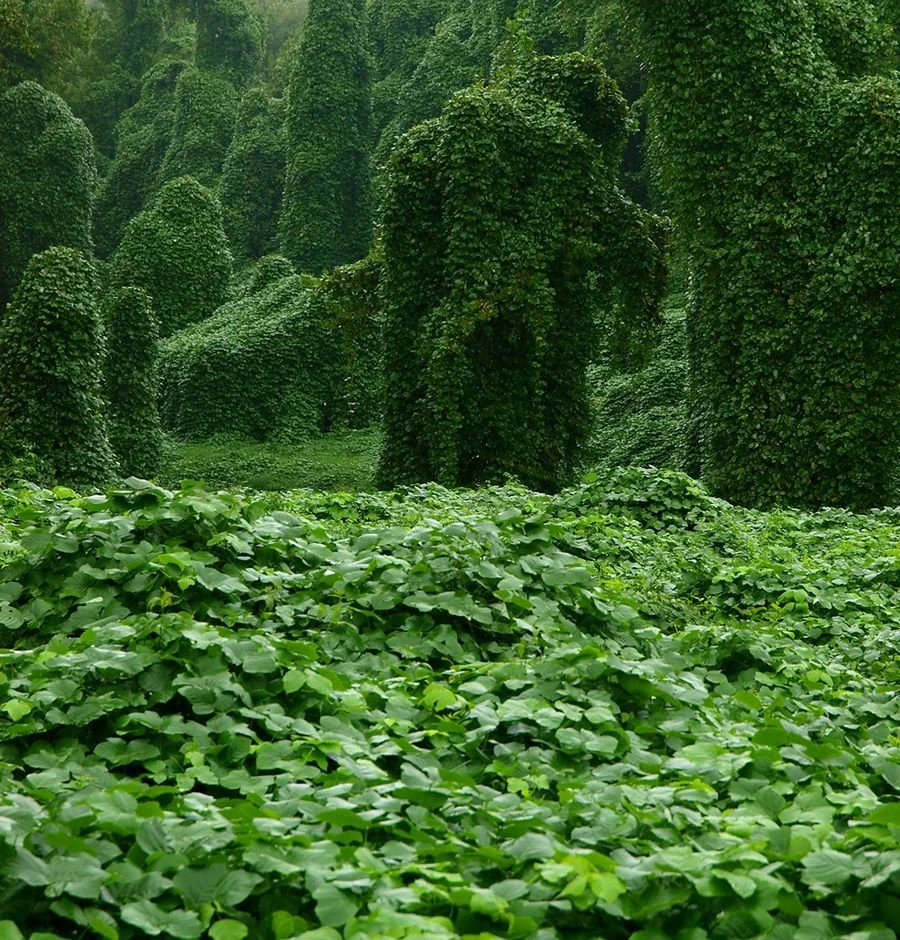
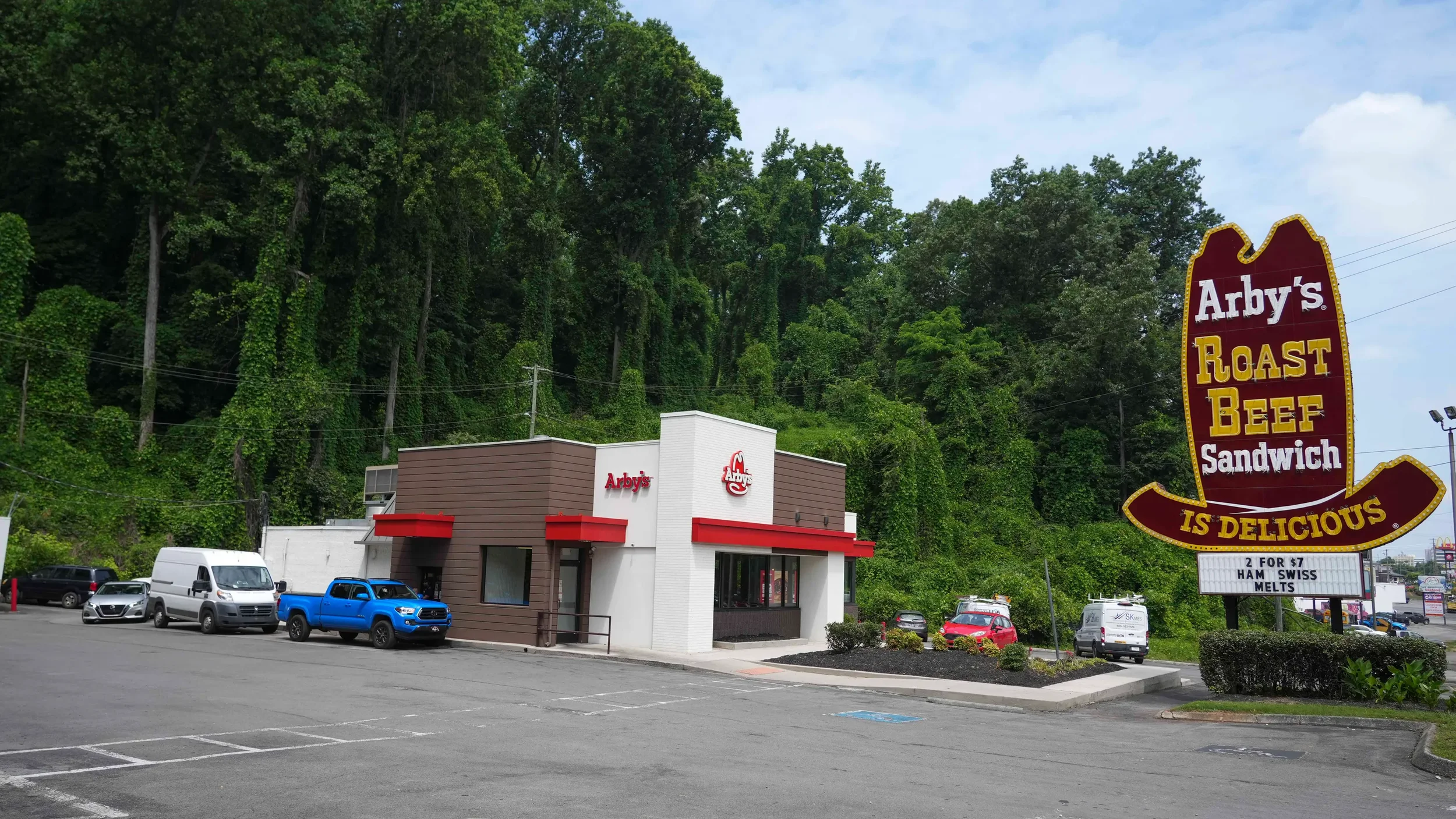
A native of Asia, kudzu was introduced into the U.S. in 1876. By 1900, it was available through mail order as an inexpensive livestock forage. The Soil Erosion Service distributed 85 million seedlings starting in 1933 in an effort to control agricultural erosion. In 1953, the USDA removed kudzu as a cover plant and listed it as a common weed of the South in 1970. It is estimated that kudzu now covers seven million acres in the Southeast. Distribution is as far north as Pennsylvania, Illinois, and Connecticut and from eastern Texas to central Oklahoma in the west. The largest infestations are found in Mississippi, Alabama, and Georgia.
Trailing or climbing semi-woody, perennial vines reach 98 feet in length, forming a continuous blanket of foliage. Twining, trailing, and mat-forming, this massive covering often chokes out competing native vegetation.
Roots reach a soil depth of 3-9 feet and are capable of storing large amounts of carbohydrates. Roots are tuberous, up to 7 inches in diameter.
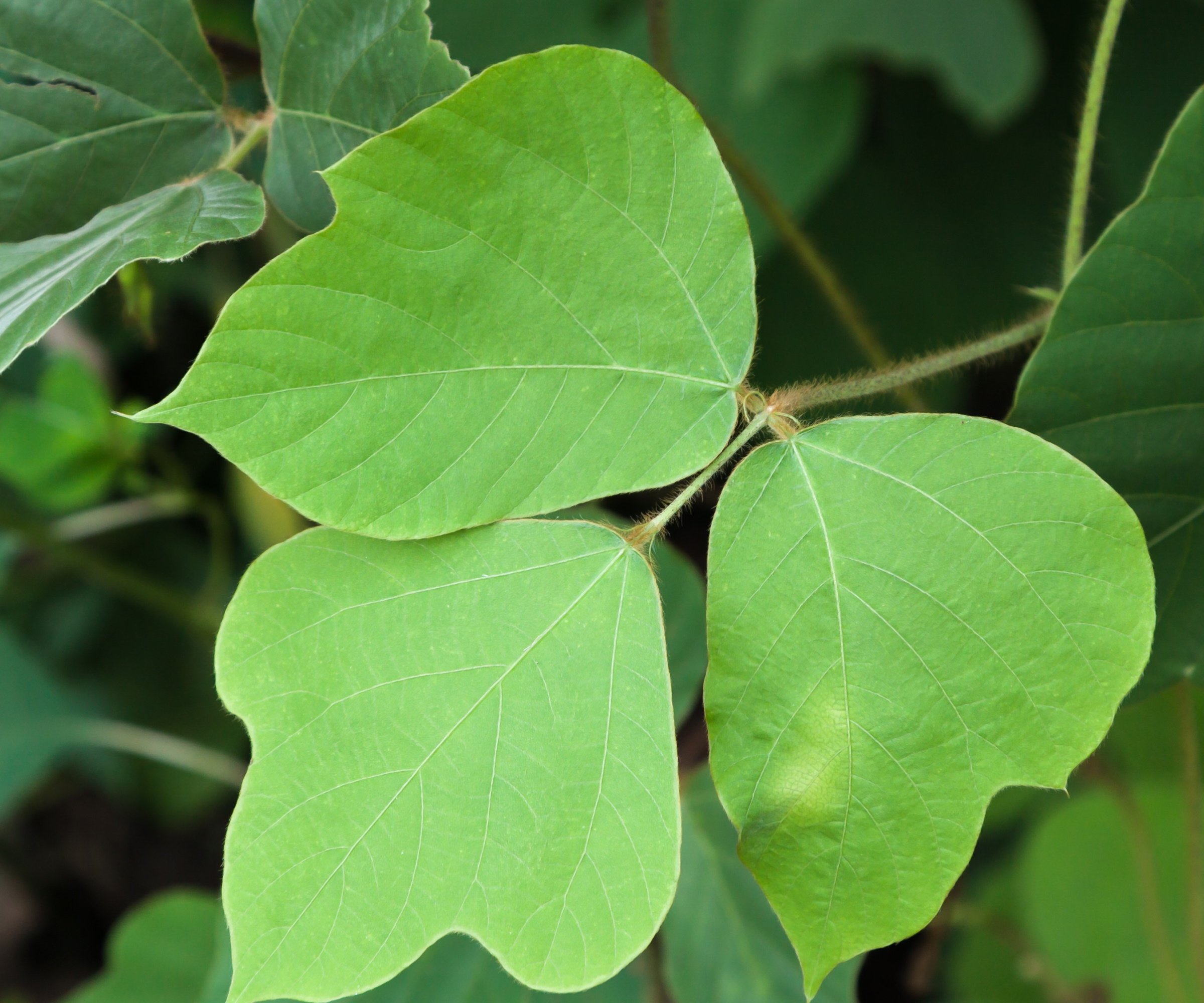
First-year vines have yellow-green stems with dense, golden hairs. Older vines are fibrous, relatively soft, ropelike, light gray, hairless, and may reach a diameter of 4 inches. Mature bark is rough, rigid, and dark brown. Foliage drops after the first fall frost. Matted dead leaves and bare stems are evident through winter.
Kudzu plants do not usually flower until their third year. Fragrant pea-like flowers that are purple with yellow centers bloom July-October.
Seeds are contained in flat, long, hairy pods in clusters. Green pods ripen to tan with stiff golden-brown hairs and mature September-October.
It is best to manage kudzu in the winter, when it has no leaves, with window cuts or by digging up mother nodes or tubers.
Find the full list of Tennessee invasive species provided by the Tennessee Invasives Council here.
3 Removal Methods
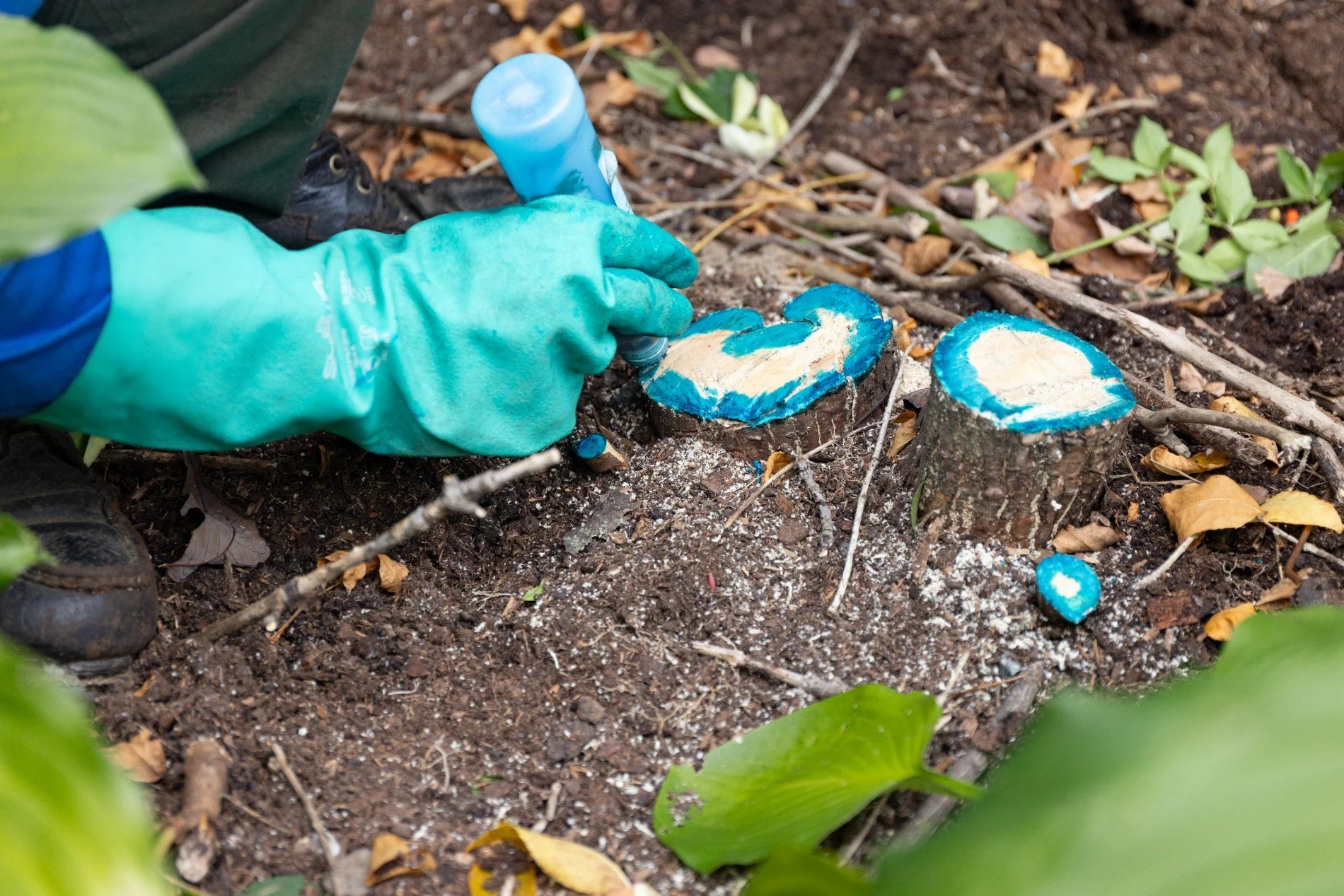
Cut Stump
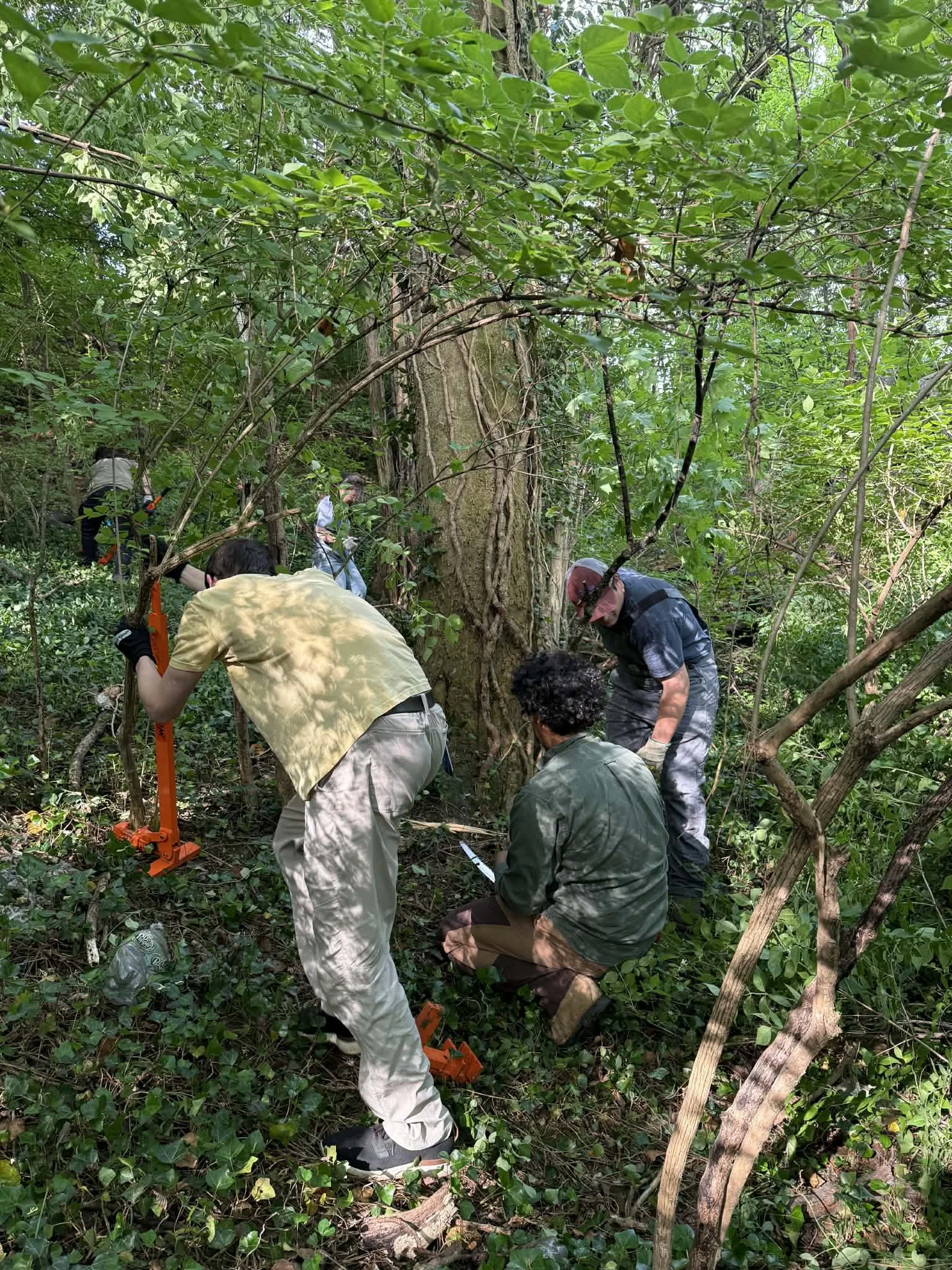
For woody plants, cut off some branches to take the weight off the top, then cut the tree down by cutting as low to the ground as possible to prevent regrowth. Then apply herbicide to the outer layer of the stump.
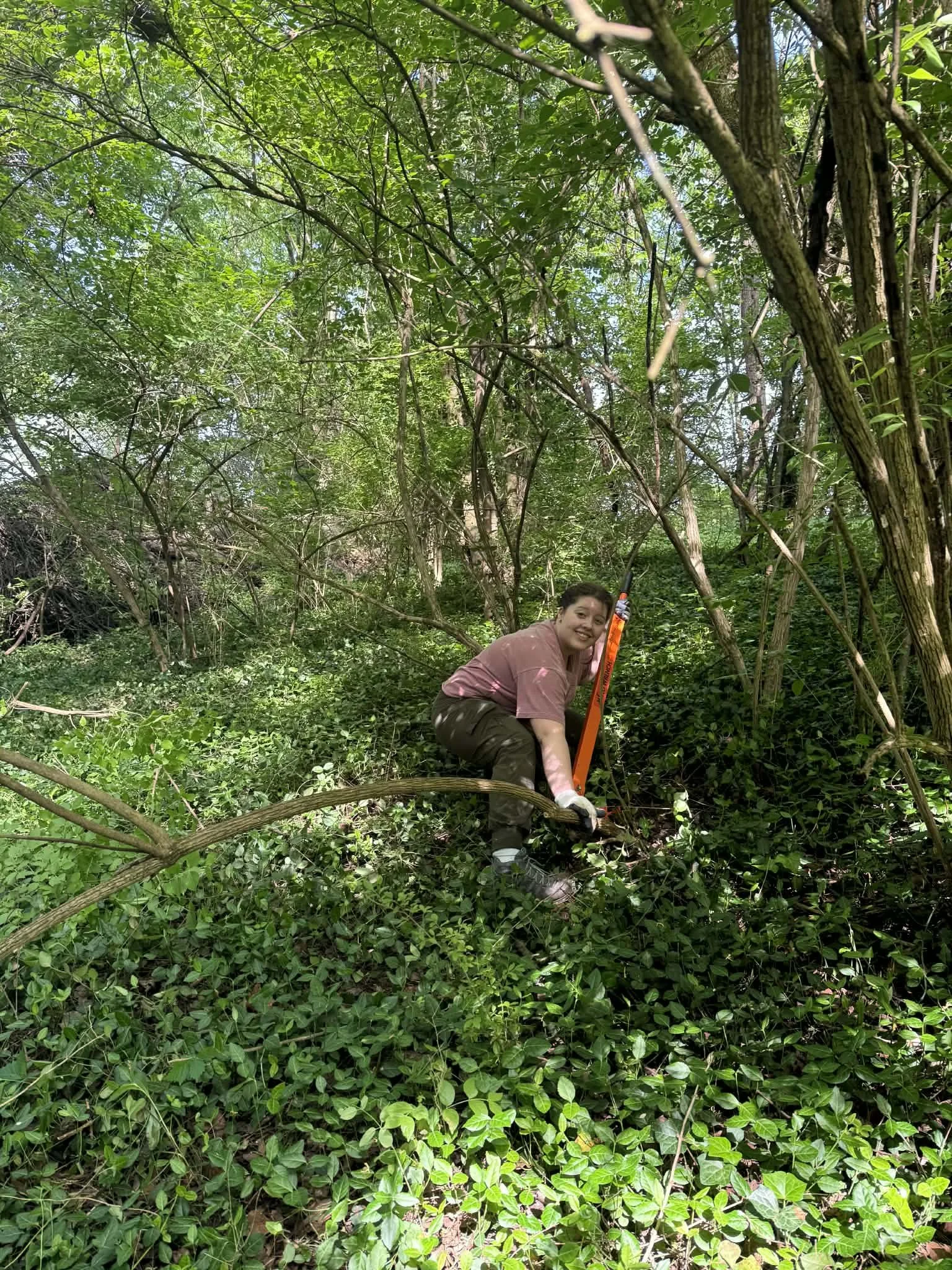
2. Window Cuts
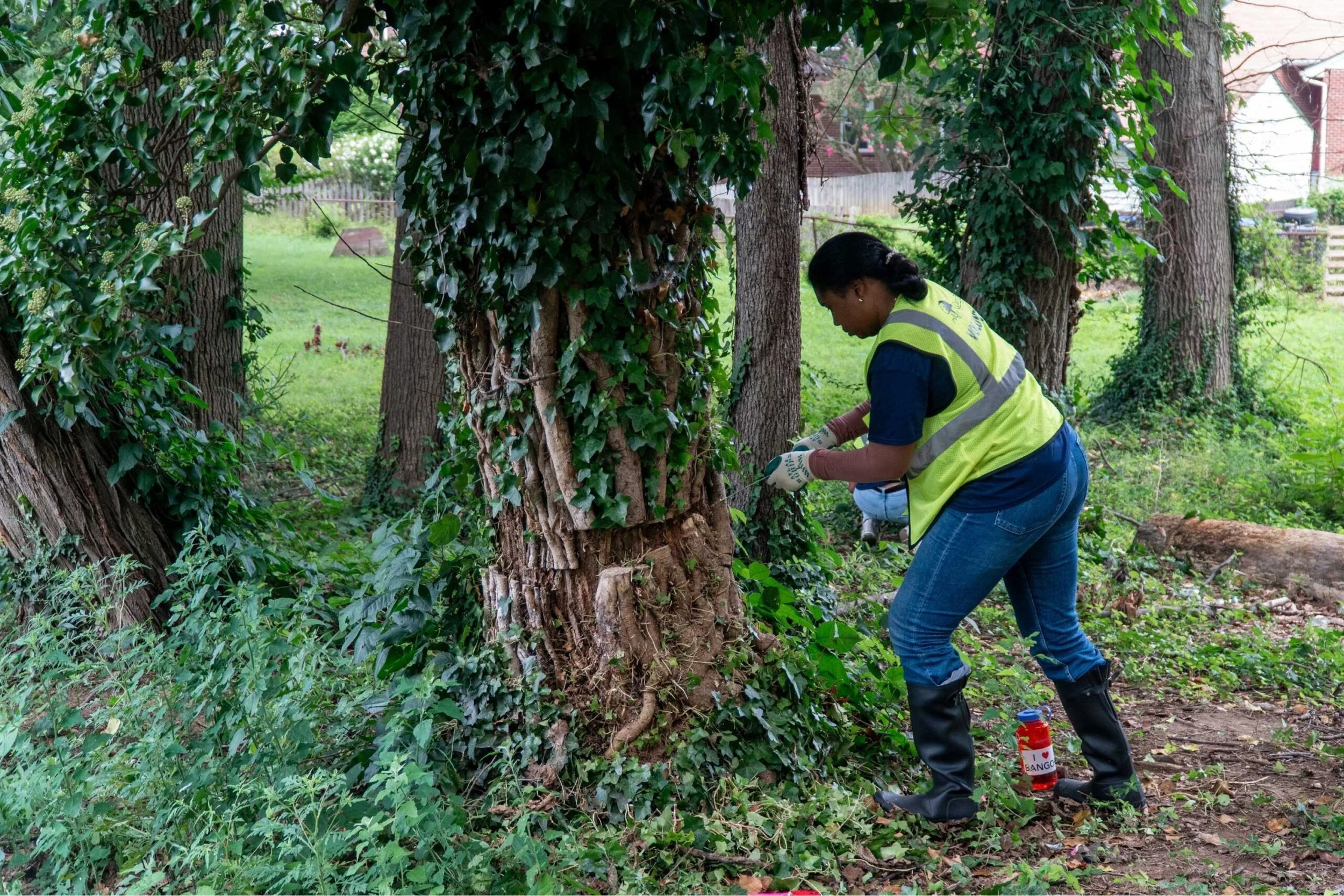
For mature vines on trees like English ivy, winter creeper, and honeysuckle. Cut as high as you can reach and as low to the ground as possible (3- 6 ft) chunk of vine cut off of the tree. Use a crowbar or hammer to wedge between the tree and vine so you don’t accidentally cut and hurt the tree. Apply herbicide to the vine, and within 1-2 weeks the vine will die. The vine will fall off the tree in a few months.
3. Hand Pulling
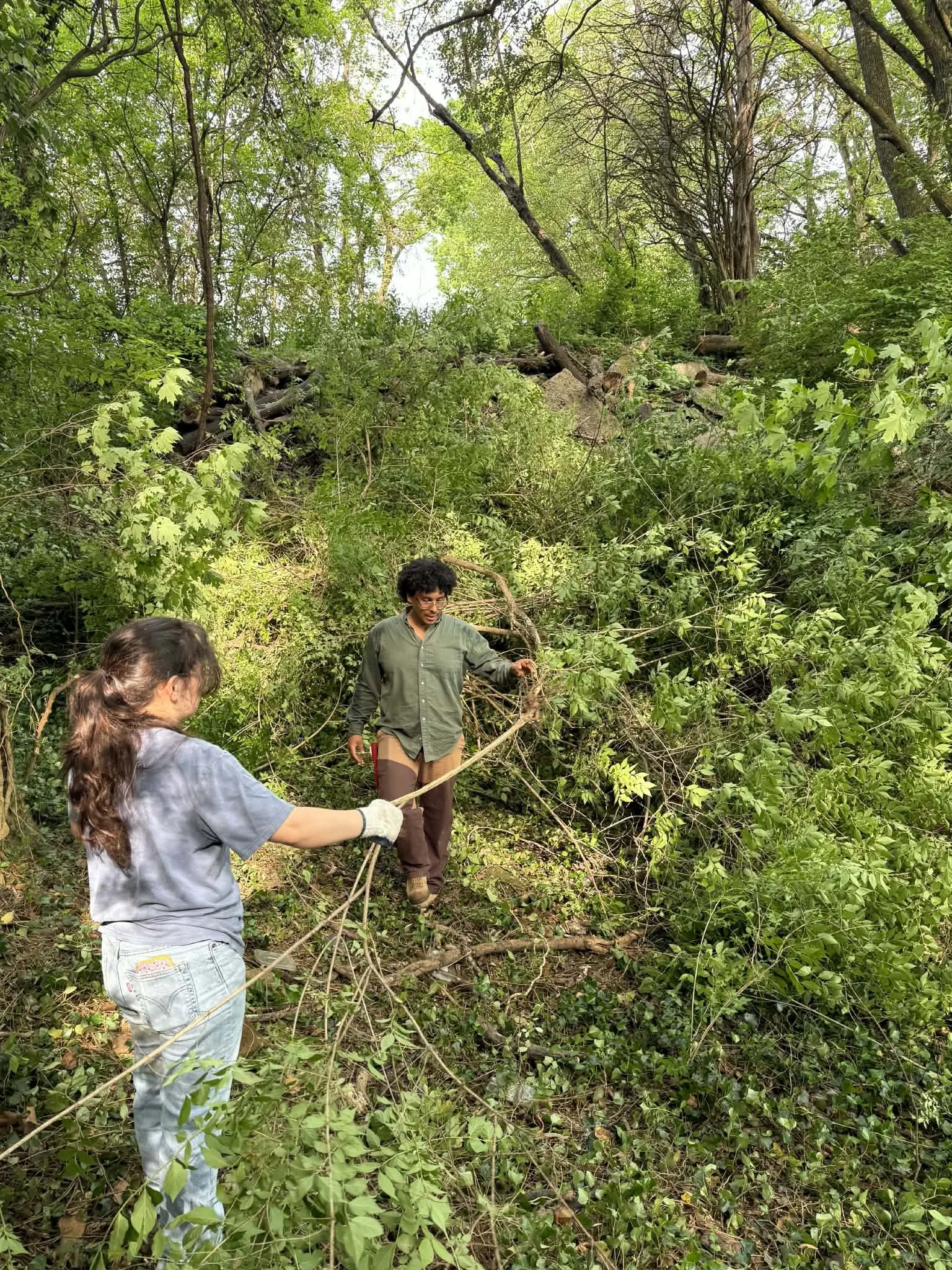
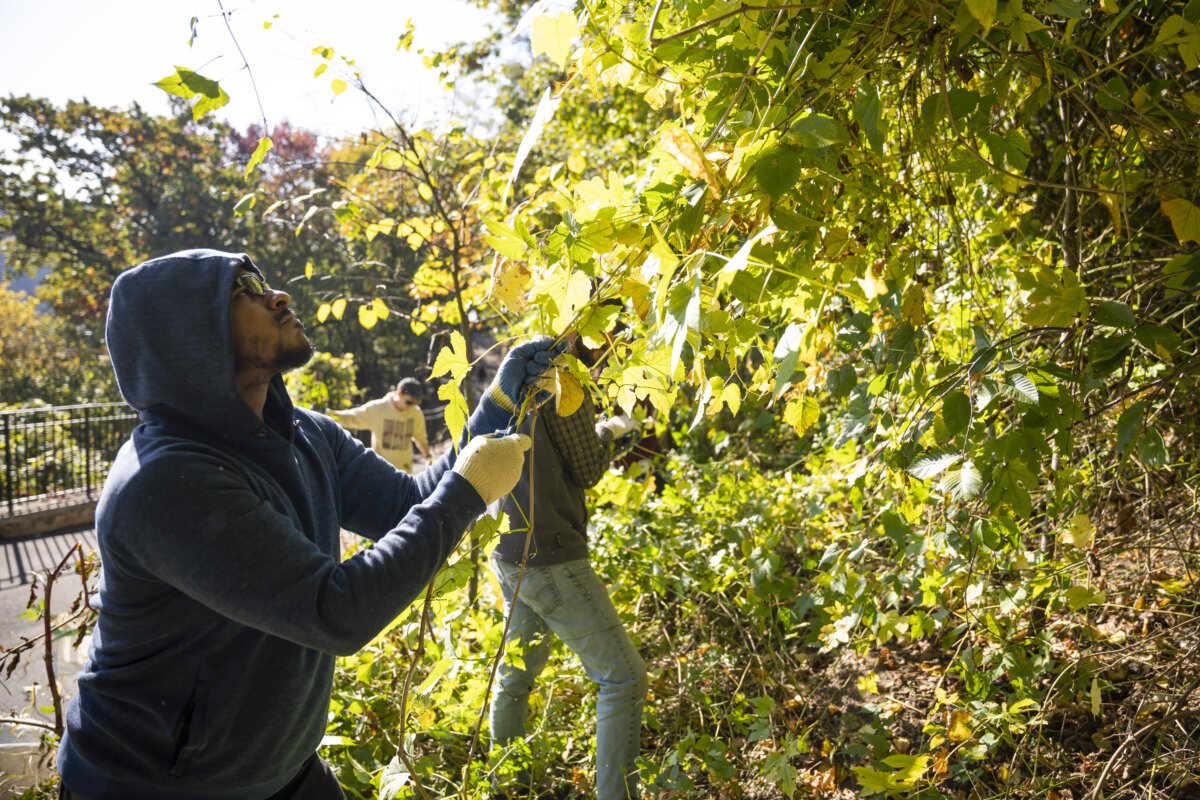
Vines that don’t climb trees, such as herbaceous and woody ground vines, you can pull by hand. Carpet rolling for English ivy and privet works well.
What to do after removal?
Make a brush pile to elevate roots and plant tissue to avoid contact with water and soil so they don’t grow back. You can burn the brush pile if you have clearance, or just let it degrade naturally over time. Don’t put it in the compost bin; instead, you can put it in a trash bag in your garbage can.
View Ijams Invasive Species Guide here!
Gianni’s Tips
Tackle the invasives
“If you do have invasives, don’t be intimidated. Even professionally, it is a multi-year management. It can be constant management, just like weeding your garden. We are combating them as a community, but we do need to be vigilant and consistent. If you can only make a small effort at a time, that’s fine. Do what you can when you can because it does make a difference. And if you need help and can afford it, there are a lot of environmentally minded contractors out there that the City of Knoxville is currently using right now, and they have effective management strategies and are being trained by the City and Ijams to be selective and thorough.”
Invasives harm
Non-native doesn’t always mean aggressive or invasive. “If a plant is listed as invasive, there’s usually a reason. A common landscaping plant that people have that they might not know is invasive is rose of Sharon, Lenten rose, Spider or Tiger lilies, etc. The harm might be more than you can see. It doesn’t exactly impact your yard, but if pollinated, it can still spread seeds [to someone else’s yard]. You might not realize the harm that your plant is doing.”
Choose Natives
“There are so many cool options out there! You know why bother with an invasive tree when you can get a witch hazel, Kentucky coffee tree, chestnut oak, or red buds. There are just so many really cool options that are in this area, and it is a shame to have an exotic plant that everyone else has, but the rest of the environment doesn’t want. When you make a choice, you have to realize that your choice can impact more than just you. When you’re doing your plant selection for your landscape, make sure you’re going to a native nursery. Most of the time, varieties [of seeds and plants] are selected for appearance, and that’s okay, but if you are concerned about pollinators and the benefit to wildlife, it is often better to buy non-variety pure species because often it will affect the flowering or fruit production and all the things that are super beneficial to our ecosystem.”
Volunteer
“If you want to learn more, you can volunteer with Ijams Nature Center every Saturday with their Weed Warriors Team! There are other outreach opportunities around Knoxville to do invasive removal, and Ijams is partnered with a lot of organizations now, such as Keep Knoxville Beautiful, Trees Knoxville, Mabry Hazen House, Black Girl Environmentalist, SEED, and the City of Knoxville, to do invasive removal.”